Legend — read this once
This guide repeats certain shorthand and standards across every plant row. They are defined here once, then referenced by section letter throughout the rows.
A. How to read this guide
Source codes
Square-bracket tags after a claim point to where the claim comes from:
- [UF] — UF/IFAS Gardening Solutions (
gardeningsolutions.ifas.ufl.edu) - [FNPS] — Florida Native Plant Society (
fnps.org) - [Revival label] — the verbatim dosing table on the 5-lb Revival worm-castings bag (decoded in
Care-list-handoff.md) - [FL-natives lean-soil rule] — the brief's principle that FL natives respond badly to heavy amendment because they evolved in poor, sandy, often alkaline soils
Current status (column 4) — drives watering frequency more than the plant's mature-state label does
In pot— still in the original nursery container. Water daily (twice daily in summer heat).Newly planted— in the ground, but roots have not extended into surrounding soil yet (first ~20–28 weeks for shrubs, 6–12 months for trees in central FL). Water every 2–8 days regardless of the plant's mature-state water-needs label.Established— past the establishment window with visible new growth. Use the schedule in column 18.
Update this column manually as each plant moves through these stages.
B. Sun, water, soil shorthand
Sun categories (column 8) — direct sun per day
- Full sun = 6+ hours direct sun
- Part sun = 3–6 hours
- Shade = under 3 hours
Water needs H / M / L (column 9) — assumes ESTABLISHED plant during dry stretches
- H (High) ≈ roughly daily
- M (Medium) ≈ every 5–7 days
- L (Low) ≈ every 10–14 days
Habitat codes H / M / X — from Plant-inventory.md, the nursery's natural-moisture classification
- H — hydric: naturally wet sites; also handles regular irrigation
- M — mesic: medium moisture; most adaptable
- X — xeric: dry sites; tolerates some irrigation but becomes disease-prone
Note: column 9's H/M/L (watering frequency once established) is a different scale from the habitat code H/M/X (the plant's natural ecology). They can disagree — e.g., a xeric plant in irrigated bedding may still need "Low" frequency.
USDA hardiness zone — average annual minimum temperature
- Davenport = zone 9b = average annual low of 25–30°F
- A plant rated "8b–11" survives zones colder than Davenport up through south Florida.
C. Establishment timeline — the most-load-bearing concept
A plant's "drought tolerant" or "low water" label only applies after it is established. Before then, every plant needs frequent water regardless of what its mature-plant label says.
Per UF/IFAS Watering to Establish Shrubs:
- Shrubs in central FL reach established at ~20–28 weeks (about 5–7 months) after planting in the ground.
- Trees in central FL reach established at 6–12 months.
- During the establishment period, water every 2–8 days depending on rainfall and heat — UF/IFAS recommends roughly 1 gallon per shrub at each watering (more frequent in summer; less frequent in winter).
So when a row says "Water needs: Low" — that's the established-plant truth, gated by column 4.
D. Soil program — applied
Lean-soil principle
FL natives evolved in poor, sandy, often alkaline soil. Heavy amendment (rich worm castings, full compost mixes, Revival Potting Soil in the planting hole) causes leggy growth, weak stems, lower disease resistance, and less bloom. Default: less amendment than the Revival label suggests, unless a specific species page calls out that it benefits from richer soil.
Worm casting depth — what ¼" / ½" / 1" mean physically
The depth is the thickness of the layer of dry castings spread on the soil surface around the plant, measured straight down with a ruler before watering in.
Practical conversions (volume by area × depth; assuming even spread of dry castings before watering in):
| Depth | 1-gal pot (~6" top) | 3-gal pot (~10" top) | 1-ft diameter ring (newly transplanted) | 2-ft diameter ring (small established plant) | 4-ft diameter ring (mature shrub) |
|---|---|---|---|---|---|
| ¼" | ~½ cup | ~1.5 cups | ~2 cups | ~8 cups (~2 qt, ~2 lb) | ~32 cups (~2 gal, ~8 lb) |
| ½" | ~1 cup | ~3 cups | ~4 cups | ~16 cups (~1 gal, ~4 lb) | ~64 cups (~4 gal, ~16 lb) |
| 1" | ~2 cups | ~6 cups | ~8 cups | ~32 cups (~2 gal, ~8 lb) | ~128 cups (~8 gal, ~32 lb) |
Density assumption: ~½ lb of worm castings per cup. A 5-lb bag ≈ ~14 cups total volume.
Practical reality check: the Revival label's "¼ to 1 inch" range is a generous spec — most home gardeners apply less (think a handful per small plant, two handfuls per shrub). One handful ≈ ½ cup. The depth measurements in this guide describe the applied dry layer before settling and watering in; after the castings settle and microbes work them down, the visible layer halves within weeks. For lean-soil natives, a single handful per plant per year is usually plenty — the depth values in the row cells are the upper bound, not the target.
Always spread evenly; never pile against the trunk. Water in afterward so the castings sink toward the roots.
Application methods — top-dress / side-dress / scratch in
The Revival label uses all three terms; they mean different things:
- Top-dress — sprinkle castings on the soil surface around the plant, water in. Slowest delivery; safest. Default method for established plants and pots.
- Side-dress — apply in a narrow strip or ring 6–8 inches away from the stem (or alongside the row for vegetables), not against it. Used to feed actively growing plants without root burn.
- Scratch in — top-dress, then lightly work the castings into the top inch of soil with fingers or a hand rake. Faster delivery; also protects the live microbes from UV light (which kills them). Use when you want a stronger pulse of feeding.
Root anatomy — rootball / root zone / dripline
- Rootball — the dense mass of roots + soil that comes out of the nursery pot when you transplant. Stays intact during planting.
- Root zone — the broader area of soil where the plant's roots actively grow. Extends past the rootball as the plant matures.
- Dripline — the imaginary circle directly under the outer edge of the canopy (where rain "drips" off the leaves). The actual root zone often extends 2–3× past the dripline.
Where to apply castings: around the rootball, out to (or just past) the dripline. Never against the trunk.
Backfill
The native soil you dug out of the planting hole, returned around the rootball after planting. Distinct from "potting mix" (an amended soilless medium for containers). For FL natives in this garden's sandy soil, the backfill is mostly the original sandy soil with minimal amendment.
Deep soak vs shallow water
- Deep soak — slow, sustained watering until the soil puddles and drains; moisture reaches roots 6+ inches down. This is the right way to water established plants. A 5-gallon bucket with one or two ¼-inch holes drilled near the bottom, set at the dripline and emptied slowly, is the cheap version.
- Shallow water — surface dampening only. Encourages weak surface roots that dry out fast. Avoid as the main watering method; fine as a quick refresh in extreme heat in addition to a deep soak.
N-P-K notation (on fertilizer / amendment labels)
- N — Nitrogen (drives leaf and stem growth)
- P — Phosphorus (drives root development and flowering/fruiting)
- K — Potassium (drives overall plant health, disease resistance, water regulation)
- Numbers are percent by weight. Revival worm castings = 0.74-0.2-0.15 — very low and slow-release, so over-application is hard to do in normal use (still keep off trunks).
E. Ecology — pollinator terminology (column 13)
Plants serve wildlife in three distinct roles, often shown together in a row:
- Nectar source — adult butterflies, bees, and other pollinators feed on the flowers' nectar
- Larval host — the leaves feed caterpillars of specific butterfly/moth species (e.g., milkweeds host Monarch caterpillars; Hercules Club hosts Giant Swallowtail). Without host plants, no next generation.
- Berry / seed food — birds (mockingbirds, cardinals, blue jays, etc.) eat the fruit or seeds
A row may list one, two, or all three.
F. Maintenance — standard FL mulch
Where a row says "mulch per standard," it means:
- 2–3 inches of pine bark or pine straw
- Spread in a ring around the plant out to (or just past) the dripline
- Kept off the trunk — mulch touching wood traps moisture and causes rot
G. FL seasonal calendar — central FL / zone 9b
When the guide says "early spring feeding" or "fall transplant window," these months are meant:
- Winter — Dec–Feb (cool, dry; safest transplant window for woody natives)
- Spring — Mar–May (early spring = Mar; warming through May)
- Summer — Jun–Sep (rainy season + heat; worst time to transplant; daily watering for potted plants)
- Fall — Oct–Nov (cooling; second-best transplant window)
Plant rows — 19 species
#1Simpson's StopperMyrcianthes fragrans
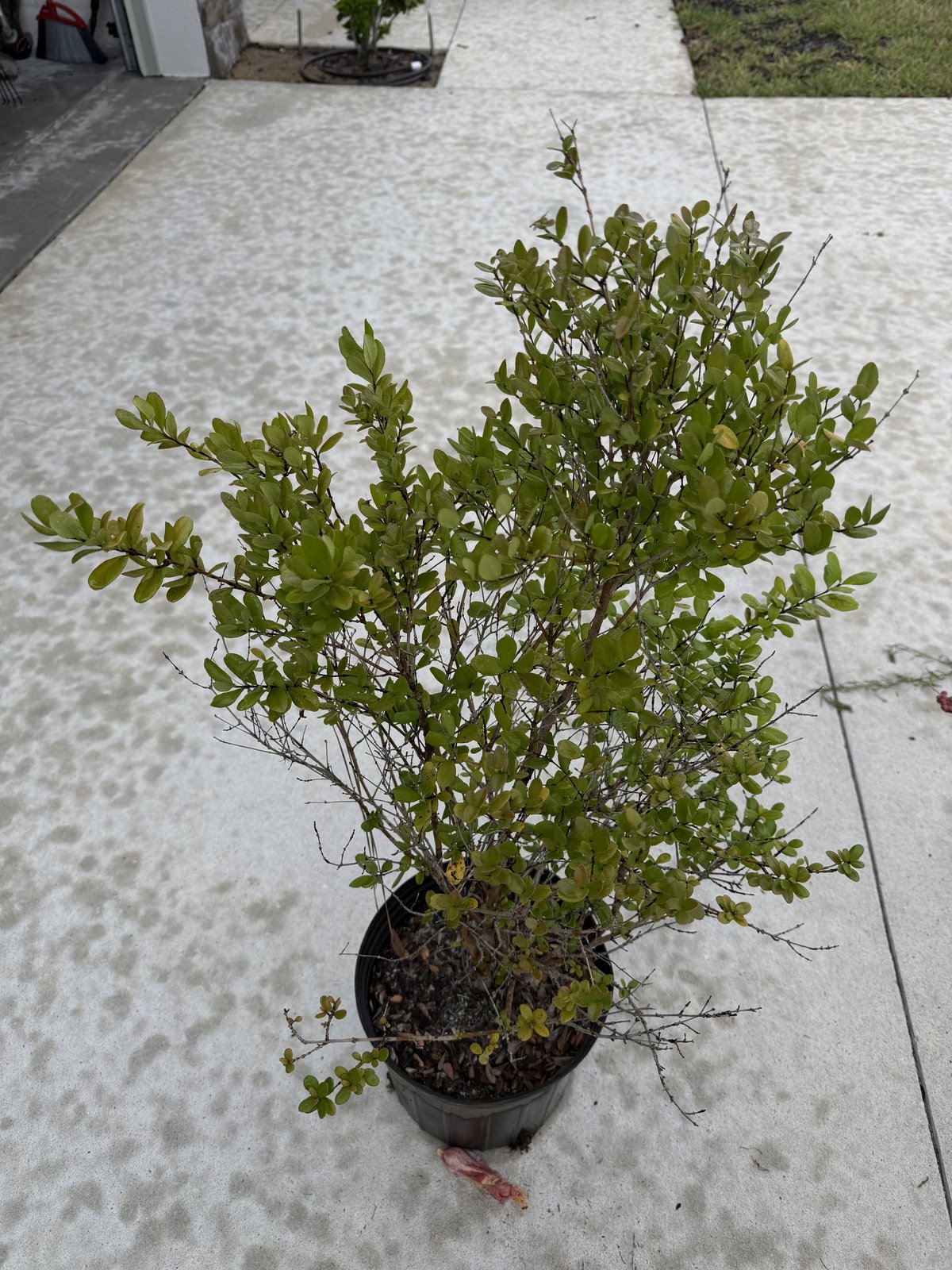
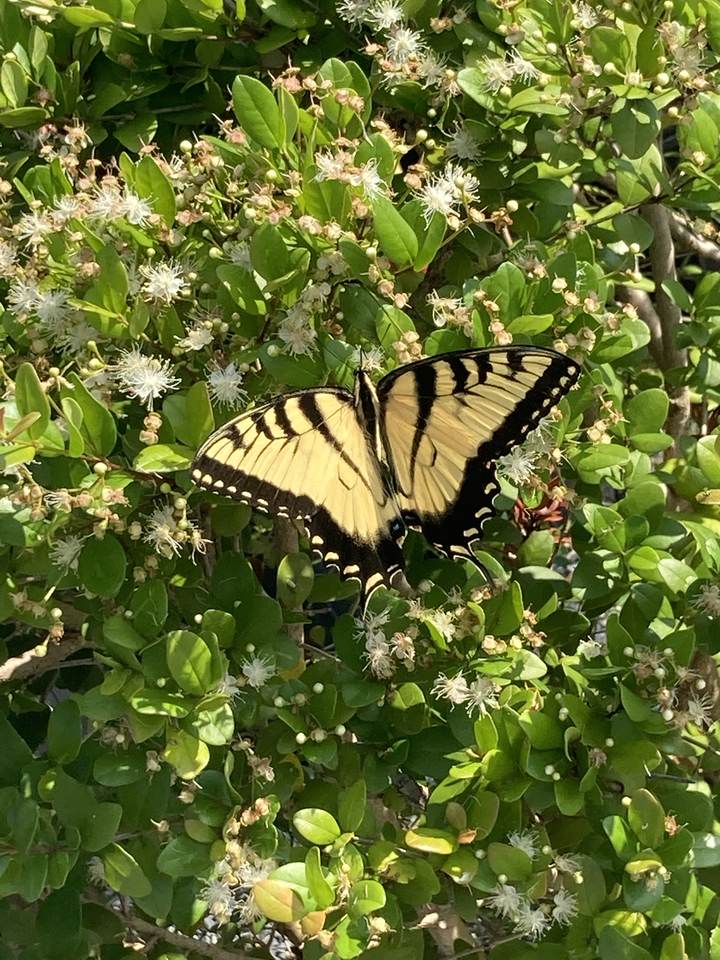
| # | Field | Value |
|---|---|---|
| 4 | Current status | In pot — 1× 3-gal nursery pot, purchased 2026-05-13 |
| 5 | Bloom time | Apr–May (peak); sporadic light bloom year-round [UF, FNPS] |
| 6 | Bloom color | White, fragrant; followed by orange-to-red berries late summer–early fall [UF] |
| 7 | Mature size (H × W) | 5–20 ft H × 3–15 ft W. Standard form reaches 20 ft; 'Compacta' cultivar tops out ~5 ft [UF, FNPS] |
| 8 | Sun | Full sun to Part sun. Denser in full sun (better for hedge); opens up in shade with visible bark [UF] |
| 9 | Water needs | L (Low) once established. FNPS lists tolerance range as flooded to extremely dry — extremely adaptable [FNPS]. See legend section C — this applies only when Established. |
| 10 | Soil type and pH | Wide tolerance — sandy and well-drained ideal; also handles poor drainage and alkaline soils; salt-tolerant. pH 6.0–8.0 [UF] |
| 11 | USDA zone range | 8b–11 (cold-hardy to ~25°F, possibly lower) [UF]. Davenport's 9b is comfortably in range. |
| 12 | Transplant window for zone 9b | Oct–Feb (Fall / Winter per legend section G) |
| 13 | Pollinator / wildlife value | Nectar source for native bees and butterflies; berry food for mockingbirds, cardinals, blue jays, buntings [UF]. Not a major larval host. |
| 14 | Pest / disease quick notes | Very few. Watch for guava rust / myrtle rust (Austropuccinia psidii) — orange spore spots on new growth; treat with ornamental fungicide if it appears [UF]. Occasional scale. |
| 15 | Companion planting | Pairs well with other FL mesic-hammock natives: saw palmetto, beautyberry, coontie, Walter's viburnum. From this inventory: Little Blueberry (#2) and Hercules Club (#13) group naturally as shrub anchors; wildflowers (#3–#12) work as understory in sun gaps. No specific "avoid" species. |
| 16 | Propagation | Seed (easiest; FNPS notes "easily grown from seed") [FNPS]. Cuttings possible but slower. |
| 17 | Maintenance notes | Slow grower (~1 ft/year). Prune lightly to shape — heavy or frequent pruning reduces flowering and fruiting [UF]. Tolerates hard pruning for hedge, bonsai, or topiary forms. Mulch per standard (legend section F). Hurricane wind–resistant once mature [FNPS]. |
| 18 | Schedule — days between waterings when ESTABLISHED | 14 (deep soak every 14 days during dry stretches; skip during normal rain weeks) |
| 19 | Soil amendment — IN POT (now) | Minimal. Optional ¼" top-dress, one time only, then leave alone. Do not repeat every 4–6 weeks — that's the ornamental cadence and would push leggy growth on a native [Revival label "Established potted plants" + FL-natives lean-soil rule]. Skipping entirely is also fine. |
| 20 | Soil at transplant | Backfill with native sandy soil, mostly unamended. Dig hole 2× rootball width, same depth as rootball. Optionally mix ~10% worm castings into the backfill. Do NOT use Revival Potting Soil in the planting hole — too rich; discourages roots from spreading into surrounding sand [FL-natives lean-soil rule + UF native-planting guidance]. |
| 21 | Worm castings at transplant | After planting + watering in, wait 1–2 weeks for transplant shock to settle, then top-dress ½" around the rootball out to the dripline (not against the trunk), water in, mulch over. Skip the "scratched-in 2–4 cups" dose (Revival label's "established roses" line, not for natives) [Revival label "New or transplanted trees, shrubs, berries" — lean-modulated]. |
| 22 | Ongoing feeding (post-established) | One light application per year in early spring (Mar per legend section G) — top-dress ½" above the root zone, water in, mulch over. Skip the fall second dose the Revival label suggests for perennials; natives don't need it [Revival label "Perennials" line — lean-modulated]. |
| 23 | Source | UF/IFAS Simpson's Stopper · FNPS Myrcianthes fragrans · Revival Gardening worm-castings bag label (in hand) · UF/IFAS Watering to Establish Shrubs |
#2Little Blueberry (Darrow's Blueberry)Vaccinium darrowii
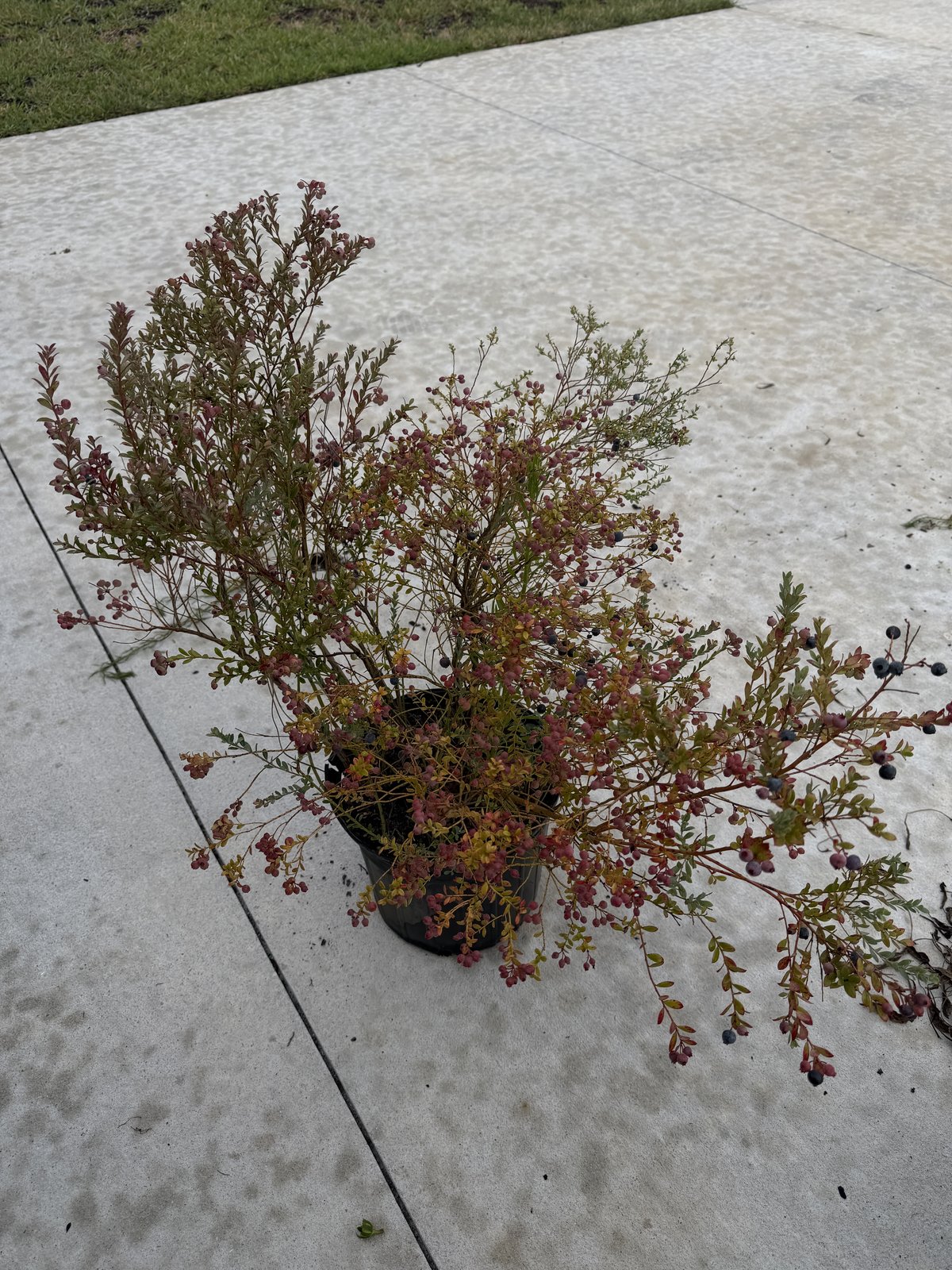
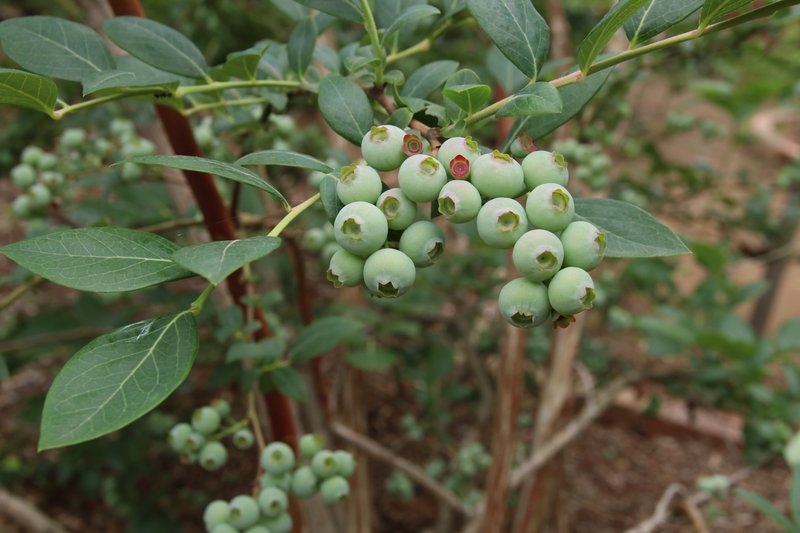
| # | Field | Value |
|---|---|---|
| 4 | Current status | In pot — 1× 3-gal nursery pot, purchased 2026-05-13 |
| 5 | Bloom time | Spring (Mar–Apr) [UF, FNPS] |
| 6 | Bloom color | Pink or white, bell-shaped flowers; edible blueberries late spring to early summer [UF] |
| 7 | Mature size (H × W) | ~2 ft H × 2 ft W (small evergreen shrub) [UF] |
| 8 | Sun | Full sun to Part sun |
| 9 | Water needs | M (Medium). UF/IFAS: "prefers it more moist, albeit not wet" — does best in evenly moist conditions; does not tolerate standing water [UF]. See legend section C — applies only when Established. |
| 10 | Soil type and pH | Sandy, ACIDIC. Native to FL flatwoods and pine forests where soil is naturally acidic [UF]. Target pH 4.5–5.5 (standard Vaccinium range). This is the lean-soil-rule exception in this garden — Vaccinium needs an acidic, amended environment, not the default "native sand, unamended" approach. |
| 11 | USDA zone range | 7–10 (Davenport's 9b safely in range) |
| 12 | Transplant window for zone 9b | Oct–Feb (Fall / Winter per legend section G) |
| 13 | Pollinator / wildlife value | Nectar source for native bees — especially bumblebees and the southeastern blueberry bee (Habropoda laboriosa), which specializes on Vaccinium. Berry food for birds, small mammals, and humans (edible, sweet). |
| 14 | Pest / disease quick notes | Few when soil pH is right. Watch for chlorosis (yellow leaves with green veins) — signals soil pH has drifted too high (alkaline); fix with elemental sulfur or acidifying amendment. Root rot if soil stays waterlogged. |
| 15 | Companion planting | Pairs with other acid-loving FL natives (gallberry, fetterbush, wax myrtle). From this inventory: Simpson's Stopper (#1) tolerates wider pH so can sit nearby. Avoid co-planting with alkaline-loving species. Wildflowers (#3–#12) as understory work — most FL native wildflowers tolerate slightly acidic soil. |
| 16 | Propagation | Softwood cuttings in summer or layering. Seed is slow and germination is unreliable. |
| 17 | Maintenance notes | Light pruning after fruiting (early summer) to shape and encourage new growth. Mulch with pine bark or pine straw (both naturally acidic — helps maintain target pH) per legend section F. Don't lime; don't use hardwood-bark mulch (can raise pH). |
| 18 | Schedule — days between waterings when ESTABLISHED | 7 (M-range; Vaccinium prefers consistent moisture, not the 10–14-day cycle a Low-water plant gets) |
| 19 | Soil amendment — IN POT (now) | The nursery container media is likely already acidic. Optional ¼" top-dress one time, then leave alone. Don't disturb the pot media. |
| 20 | Soil at transplant | EXCEPTION to lean-soil rule. Dig hole 2× rootball width. Backfill with 50/50 native sandy soil + Revival Potting Soil (Revival contains peat moss, which is naturally acidic — well-suited for blueberry). Alternative if Revival runs low: native soil + sphagnum peat moss (1:1) + a handful of pine-bark fines. Top with pine-straw mulch. This is the one plant in this inventory where Revival Potting Soil belongs in the planting hole. |
| 21 | Worm castings at transplant | Modest. Worm castings are roughly pH neutral (~6.5–7.0), so a heavy dose can drift the soil toward alkaline. After 1–2 weeks recovery, top-dress ¼" around the rootball out to dripline, water in. Less is more for a blueberry. |
| 22 | Ongoing feeding (post-established) | One ¼" top-dress in early spring (Mar). Supplement with elemental sulfur or an acid-loving plant fertilizer (e.g., Holly-Tone, Espoma) per package directions if pH drifts up — watch for chlorosis as the trigger to act. Mulch refresh annually with pine bark or pine straw. |
| 23 | Source | UF/IFAS Marion County — Darrow's Blueberry · FNPS Vaccinium darrowii · Florida Wildflower Foundation — Darrow's blueberry · Revival Gardening worm-castings bag label |
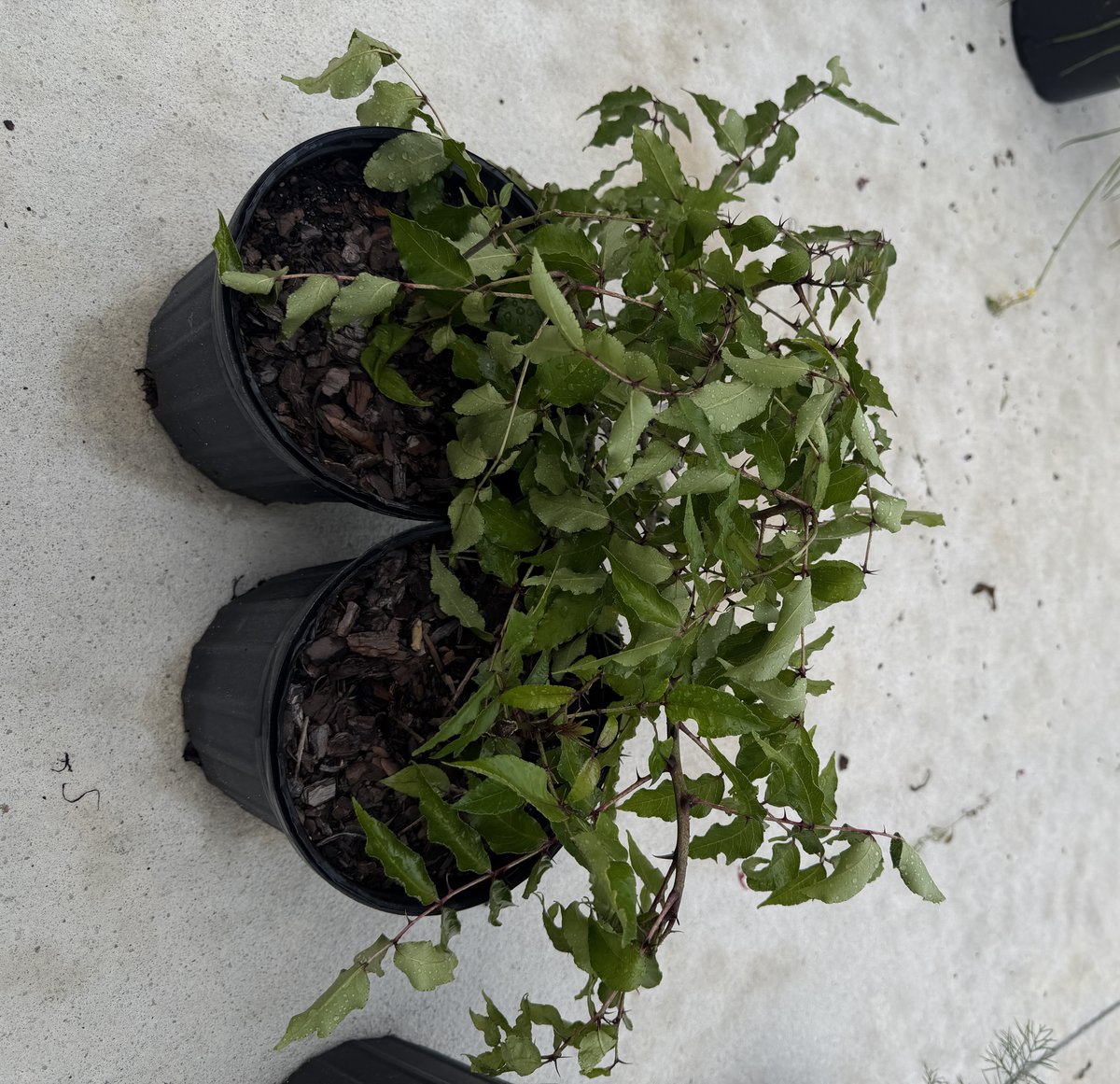
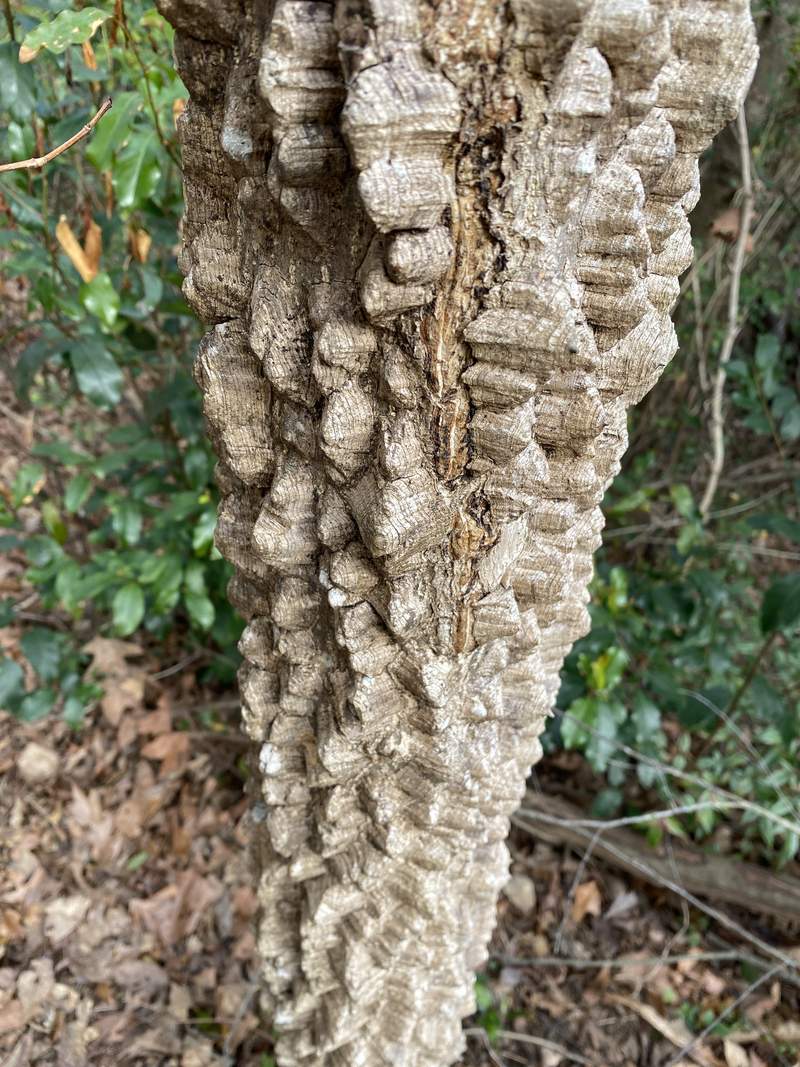
#13Hercule's Club (Southern Prickly Ash / Toothache Tree)Zanthoxylum clava-herculis
| # | Field | Value |
|---|---|---|
| 4 | Current status | In pot — 2× 1-gal nursery pots, purchased 2026-05-13 |
| 5 | Bloom time | Spring (Mar–May) [FNPS] |
| 6 | Bloom color | Small white flowers (not showy); yellow fruit ripens in fall [FNPS] |
| 7 | Mature size (H × W) | 10–25 ft H × 10–25 ft W (occasionally to 50 ft) — small tree at maturity [FNPS] |
| 8 | Sun | Full sun to Part sun [FNPS] |
| 9 | Water needs | L (Low) once established. FNPS lists tolerance range from "usually moist, occasional inundation" to "somewhat long very dry periods" — extremely adaptable [FNPS]. See legend section C. |
| 10 | Soil type and pH | Sand, clay, loam — wide tolerance; well-drained preferred. pH from mildly acid to mildly alkaline (~6.0–7.5). Sandy Davenport soil works directly with no amendment needed. |
| 11 | USDA zone range | 8a–9b [FNPS]. Davenport's 9b is at the upper (warm) edge — fine here, won't push further south well. |
| 12 | Transplant window for zone 9b | Oct–Feb (Fall / Winter per legend section G) |
| 13 | Pollinator / wildlife value | Larval host for Giant Swallowtail (Papilio cresphontes) — this is the headline ecological value [FNPS, nursery butterfly list]. Also nectar source for native bees and butterflies from spring flowers, and berry/seed food for birds and small mammals. |
| 14 | Pest / disease quick notes | Few. Wood is soft and weak — can break in storms, but the tree resprouts from low on the trunk [FNPS]. Distinctive trunk thorns — plant carefully away from walkways, pet runs, and play areas. |
| 15 | Companion planting | From this inventory: group with Simpson's Stopper (#1) and Little Blueberry (#2) as the shrub/small-tree backbone of the garden. Wildflowers (#3–#12) work as understory in the sun gaps around it. Avoid planting along paths or where someone might brush against the thorny trunk. |
| 16 | Propagation | Seed [FNPS]. Cuttings are difficult. |
| 17 | Maintenance notes | Minimal. Light pruning to shape and remove low limbs (handle with thick gloves — thorns). Will recover from storm damage by resprouting; don't be quick to remove storm-broken specimens. Mulch per standard (legend section F). |
| 18 | Schedule — days between waterings when ESTABLISHED | 14 (Low-range; very drought-tolerant once established) |
| 19 | Soil amendment — IN POT (now) | Minimal. Optional ¼" top-dress one time, then leave alone. Skipping entirely is fine. |
| 20 | Soil at transplant | Backfill with native sandy soil, mostly unamended. Hole 2× rootball width, same depth as rootball. Optionally mix ~10% worm castings into the backfill. Do NOT use Revival Potting Soil in the planting hole [FL-natives lean-soil rule]. |
| 21 | Worm castings at transplant | After planting + watering in, wait 1–2 weeks, then top-dress ½" around rootball out to dripline, water in, mulch over. [Revival label "New or transplanted trees, shrubs, berries" — lean-modulated] |
| 22 | Ongoing feeding (post-established) | One light application per year in early spring — top-dress ½" above the root zone, water in, mulch over. Skip the fall second dose. |
| 23 | Source | FNPS Zanthoxylum clava-herculis · North Carolina Extension Plant Toolbox — Hercules Club · The Natives nursery butterfly host list (in Plant-inventory.md) · Revival Gardening worm-castings bag label |
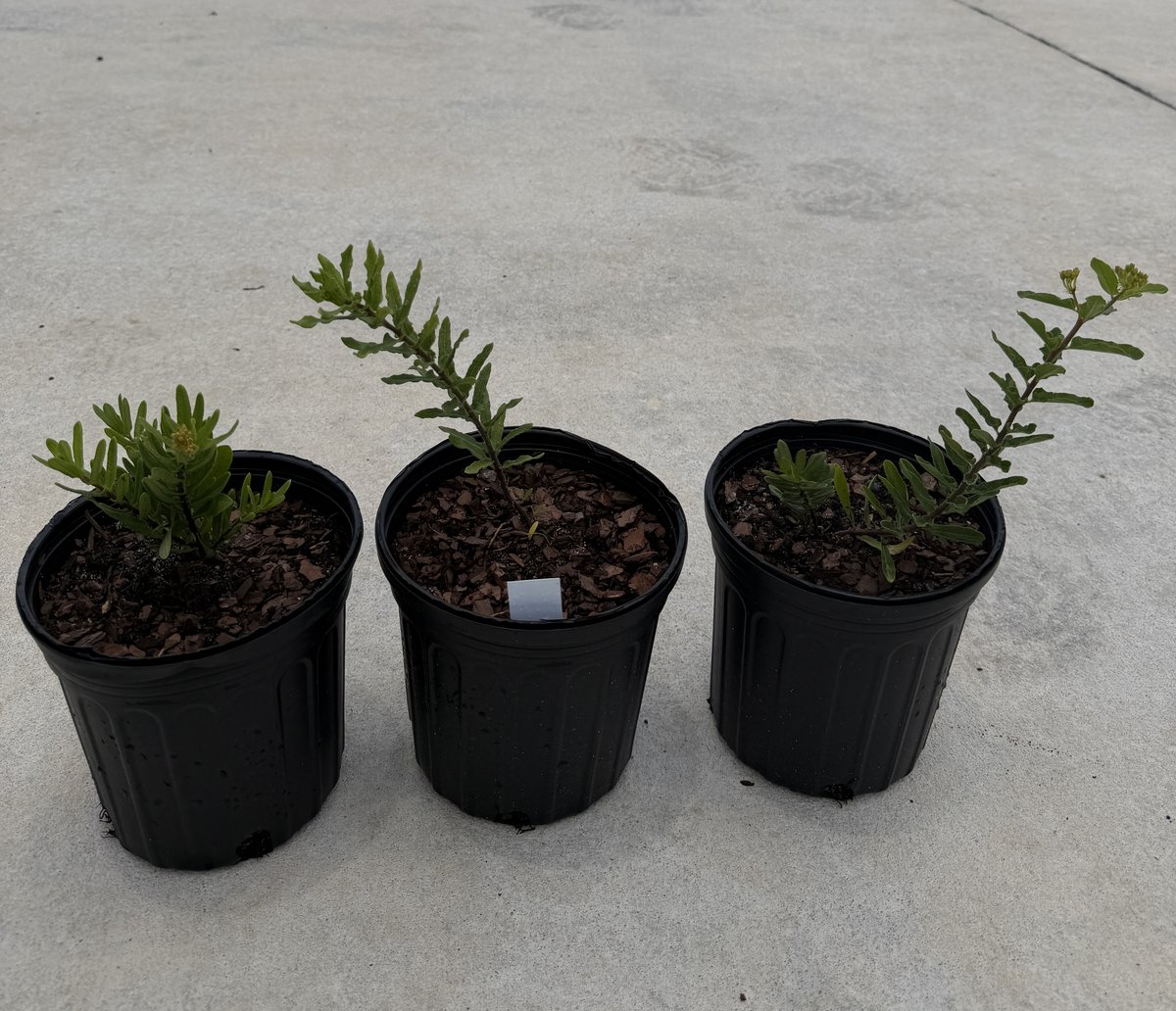
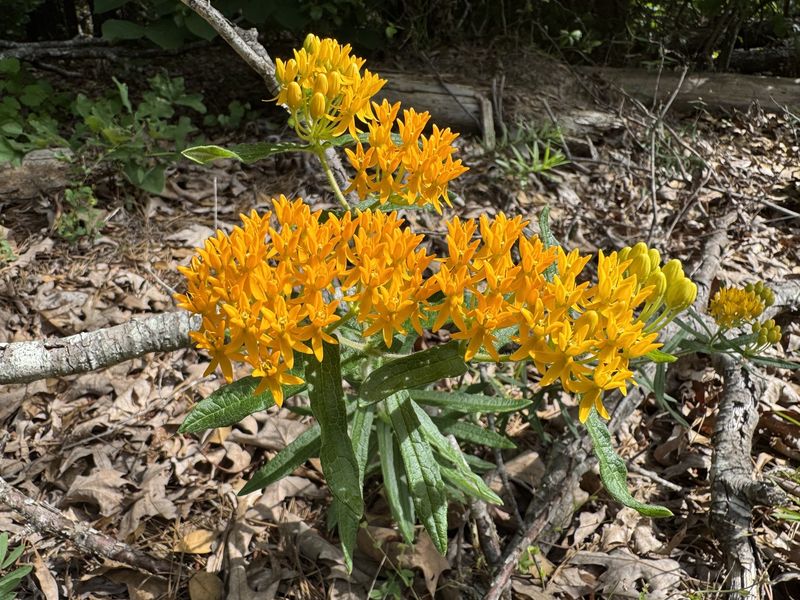
#3Butterfly Weed, FLAsclepias tuberosa
| # | Field | Value |
|---|---|---|
| 4 | Current status | In pot — 3× 1-gal nursery pots, purchased 2026-05-13 |
| 5 | Bloom time | Spring–summer (Apr–Sep in FL); winter dormant [FNPS] |
| 6 | Bloom color | Bright orange (occasionally yellow) clusters [FNPS] |
| 7 | Mature size (H × W) | 1–2 ft H × 0.5–1.5 ft W [FNPS] |
| 8 | Sun | Full sun [FNPS] |
| 9 | Water needs | L (Low). Drought-tolerant; FNPS lists tolerance from "not wet but not extremely dry" through "very long very dry periods" [FNPS]. See legend section C. |
| 10 | Soil type and pH | Sand or loam; acidic to neutral. Native to FL sandhill, scrub, and ruderal areas — thrives in poor sandy soil [FNPS]. |
| 11 | USDA zone range | 8a–10b [FNPS] |
| 12 | Transplant window for zone 9b | Oct–Feb (Fall / Winter). Wildflowers also tolerate spring planting (Mar–Apr) if watered consistently during establishment. |
| 13 | Pollinator / wildlife value | Larval host for Monarch (Danaus plexippus), Queen (D. gilippus), and Soldier (D. eresimus) butterflies — though FNPS notes this is "not the preferred larval host of the monarch" (that's A. incarnata). Nectar source for butterflies, bees, and reportedly hummingbirds [FNPS]. |
| 14 | Pest / disease quick notes | Aphids (yellow oleander aphid) common on milkweeds — tolerate them; they're part of the ecosystem. Caution: plant sap is toxic — wash hands after handling. |
| 15 | Companion planting | Group with other wildflowers (#3–#12). Especially good next to Pink Milkweed (#5) to give Monarchs both species. Tap-rooted — do not transplant once established; it resents root disturbance. Pick its forever spot at planting time. |
| 16 | Propagation | Seed. FNPS notes it is "sometimes difficult to establish in new areas, but definitely worth the effort." |
| 17 | Maintenance notes | No fertilizer needed beyond legend section D ongoing-feeding cadence. Cut back dead stems in late winter. Mulch lightly per legend section F — don't bury the crown. |
| 18 | Schedule — days between waterings when ESTABLISHED | 14 |
| 19 | Soil amendment — IN POT (now) | Skip or very minimal. Optional ¼" top-dress one time. Don't overdo. |
| 20 | Soil at transplant | Backfill with native sandy soil, unamended. No Revival Potting Soil in the hole; this is exactly the kind of poor-sand-loving native the lean-soil rule targets. |
| 21 | Worm castings at transplant | After 1–2 weeks recovery, top-dress ¼" around the rootball, water in. Less than the ½" used on shrubs — wildflowers don't need as much. |
| 22 | Ongoing feeding (post-established) | Optional ¼" top-dress in early spring. Skipping entirely is also fine — this plant thrives on neglect in poor soil. |
| 23 | Source | FNPS Asclepias tuberosa · The Natives nursery butterfly host list · Revival Gardening worm-castings bag label |
#4Wild Sensitive Plant (Partridge Pea)Chamaecrista fasciculata
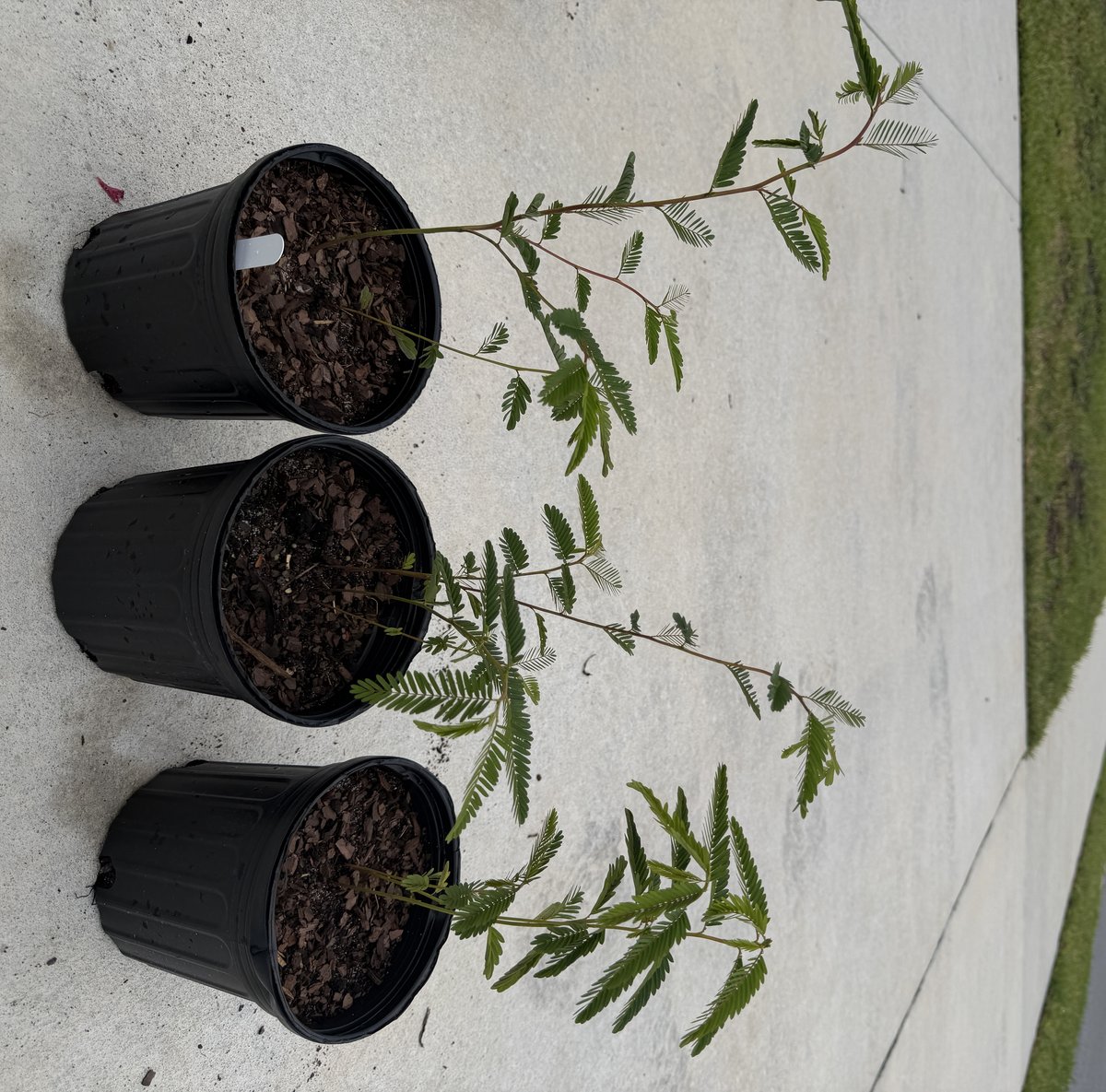
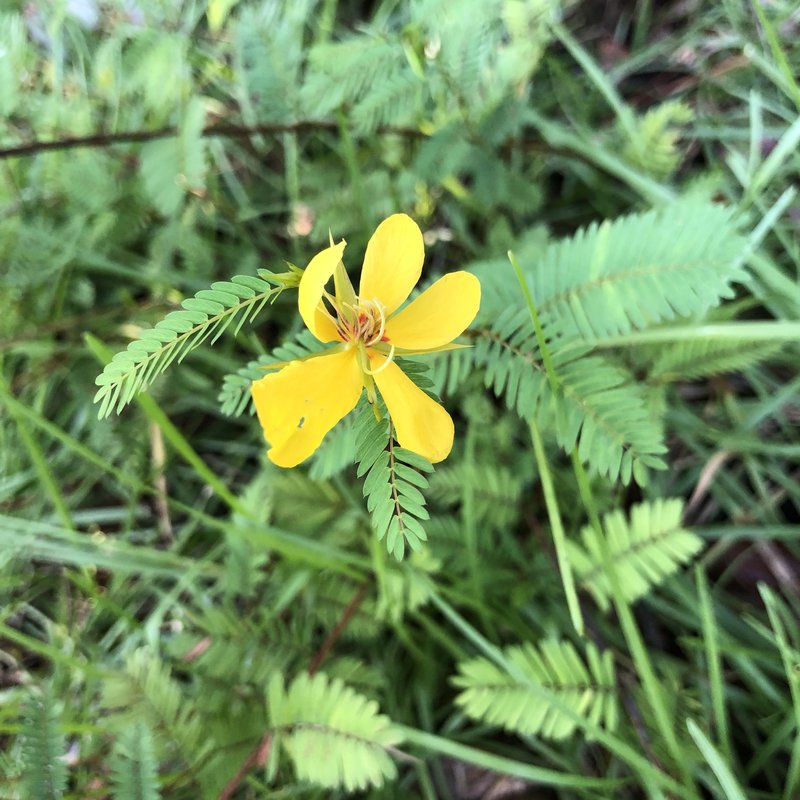
| # | Field | Value |
|---|---|---|
| 4 | Current status | In pot — 3× 1-gal nursery pots, purchased 2026-05-13 |
| 5 | Bloom time | Late spring through early fall (May–Sep) [FNPS] |
| 6 | Bloom color | Showy yellow (5-petal) [FNPS] |
| 7 | Mature size (H × W) | Up to 3 ft H × 3 ft W [FNPS] |
| 8 | Sun | Full sun [FNPS] |
| 9 | Water needs | L (Low). Tolerates dry conditions well [FNPS]. See legend section C. |
| 10 | Soil type and pH | Sandy; tolerates poor soil (legume — fixes its own nitrogen) [FNPS] |
| 11 | USDA zone range | 8a–10b [FNPS] |
| 12 | Transplant window for zone 9b | Year-round if watered consistently — this is an annual that reseeds aggressively. Best to plant in fall or spring. |
| 13 | Pollinator / wildlife value | Larval host for SIX butterfly species: cloudless sulphur, gray hairstreak, orange sulphur, sleepy orange, little yellow, and ceraunus blue [FNPS]. Nectar source via petiolar nectaries (located on the leaf stems, not the flowers — pollinated by bees but feeds many other insects). |
| 14 | Pest / disease quick notes | Few. As an annual, it dies back at the end of its cycle — that's normal, not a problem. |
| 15 | Companion planting | Plays well in a wildflower meadow with #3–#12. Self-seeds prolifically — expect new plants nearby next year wherever you let seedpods fall. Use this to fill in bare spots; don't plant where you want strict edges. |
| 16 | Propagation | Seed. Reseeds naturally; let pods dry on plant and shatter, or collect seed in fall [FNPS]. |
| 17 | Maintenance notes | None needed. Leaves are "sensitive" — fold up when touched (kid-friendly party trick). Cut back dead plants in winter; new seedlings emerge in spring. |
| 18 | Schedule — days between waterings when ESTABLISHED | 10 (annual lifecycle = more water than a deep-rooted perennial native) |
| 19 | Soil amendment — IN POT (now) | Skip. As a legume, this plant fixes its own nitrogen — adding worm castings (which contain N) gives no benefit and can encourage leaf growth over flowering. |
| 20 | Soil at transplant | Backfill with native sandy soil, unamended. No Revival Potting Soil. |
| 21 | Worm castings at transplant | Skip. Legume — doesn't need it. |
| 22 | Ongoing feeding (post-established) | Skip. Plant feeds itself via nitrogen fixation. |
| 23 | Source | FNPS Chamaecrista fasciculata · The Natives nursery catalog |
#5Pink Milkweed (Swamp Milkweed)Asclepias incarnata
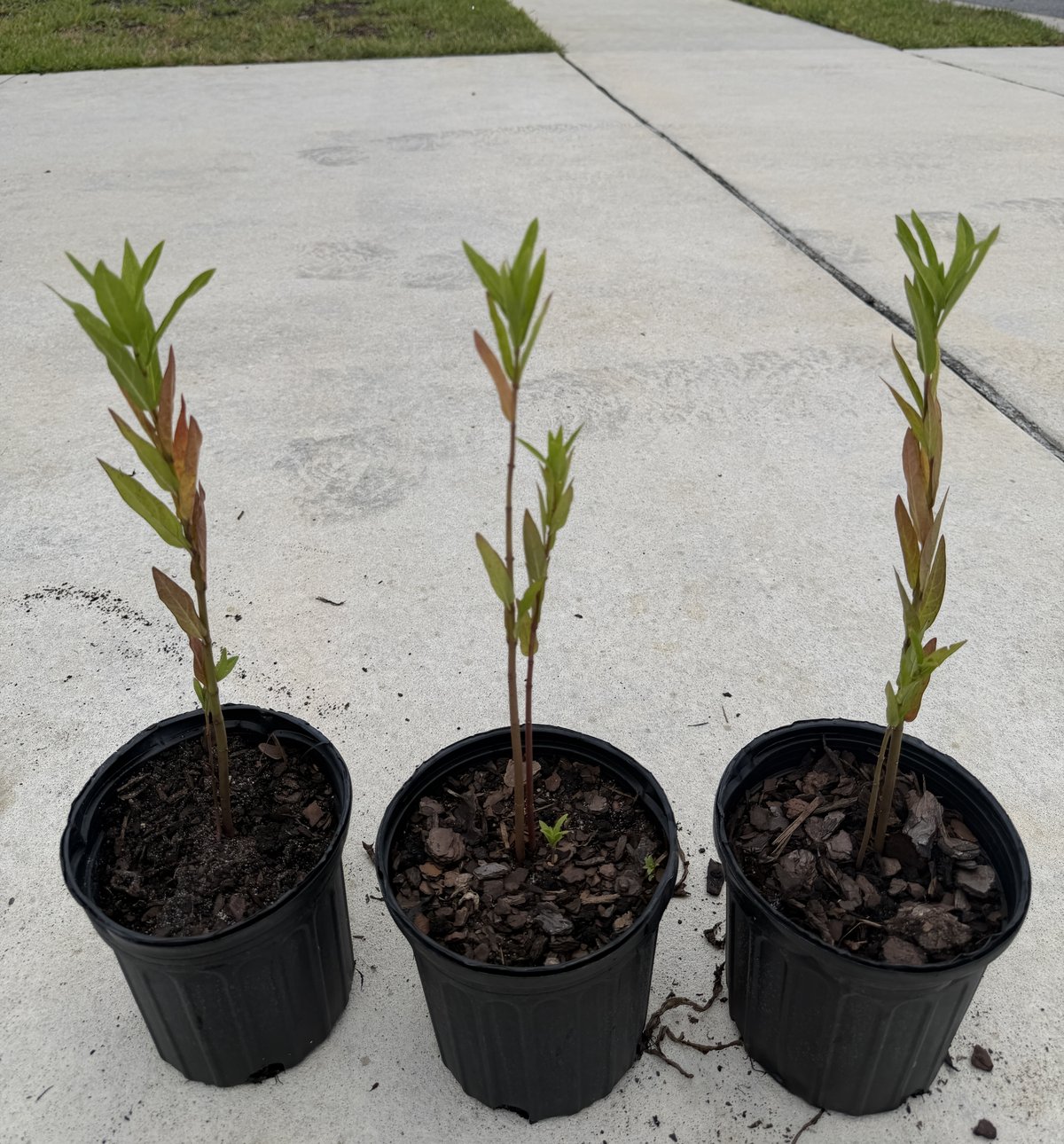
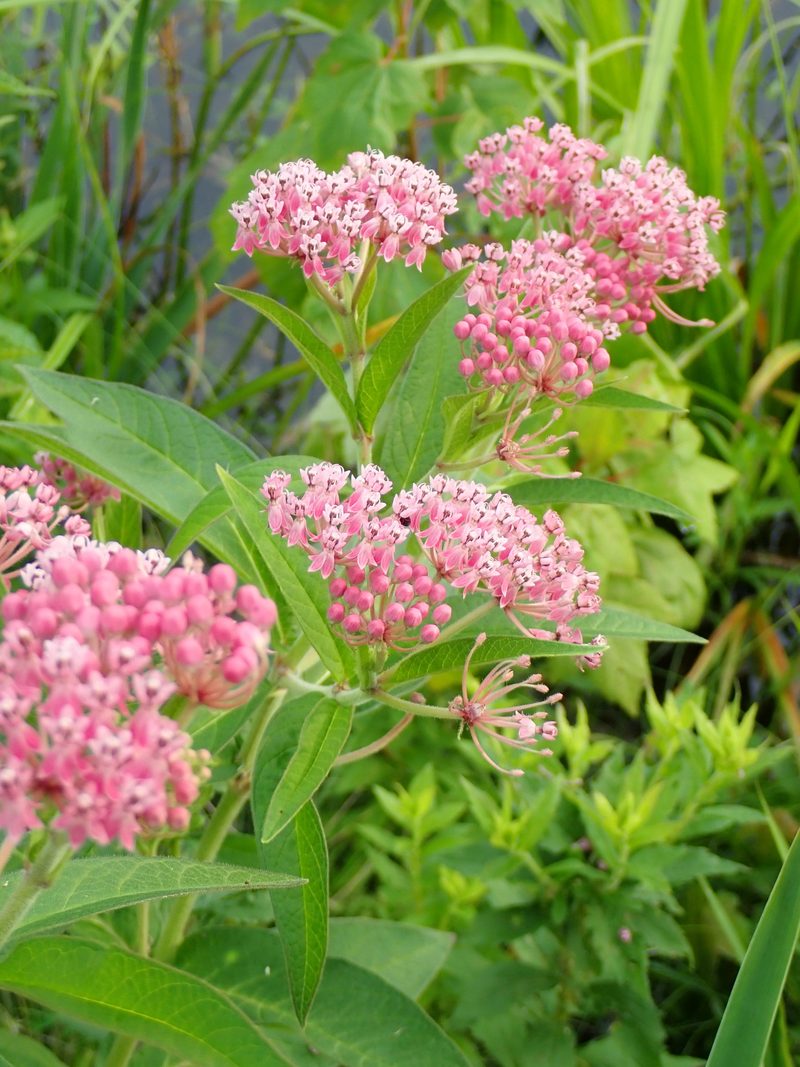
| # | Field | Value |
|---|---|---|
| 4 | Current status | In pot — 3× 1-gal nursery pots, purchased 2026-05-13. Note: per handoff, may have multiple seedlings per pot — Edgar may delay transplant to let siblings size up. |
| 5 | Bloom time | Spring–summer (May–Aug) [FNPS] |
| 6 | Bloom color | Showy pink clusters [FNPS] |
| 7 | Mature size (H × W) | 2–3.5 ft H × 1.5–2 ft W [FNPS] |
| 8 | Sun | Full sun to Part sun [FNPS] |
| 9 | Water needs | H (High) — this is the wettest plant in the inventory. FNPS: "stays wet to usually moist, occasional inundation" — notably more water-loving than other milkweeds [FNPS]. Habitat code in Plant-inventory.md is M (mesic), but real preference is closer to hydric — give it the wettest spot in the garden or a pot saucer that holds water. See legend section C. |
| 10 | Soil type and pH | Sand, clay, or loam; neutral to slightly acidic. Tolerates moisture-retentive soils that would rot other natives [FNPS] |
| 11 | USDA zone range | 8b–11 [FNPS] |
| 12 | Transplant window for zone 9b | Oct–Feb preferred; spring (Mar–Apr) workable if kept very moist |
| 13 | Pollinator / wildlife value | Larval host for the Monarch (Danaus plexippus) — and the preferred larval host over A. tuberosa per FNPS. Also hosts the Queen butterfly. Nectar source for many native bees. |
| 14 | Pest / disease quick notes | Aphids (yellow oleander aphid) — common, tolerate them. Toxic sap — wash hands. Low salt tolerance — avoid if salt spray or salty soil. |
| 15 | Companion planting | Group with Butterfly Weed FL (#3) so Monarchs find both species. Also pairs with Slender Goldenrod (#7) and Pineland Purple (#12) which share mesic moisture preferences. Plant in a low spot or near a downspout where soil stays moist. |
| 16 | Propagation | Seed. Plant in large clumps in moist areas [FNPS]. |
| 17 | Maintenance notes | Cut back dead stems in late winter. Mulch retains soil moisture. Watch for soil drying — this is the one plant you may need to water frequently even after establishment in dry stretches. |
| 18 | Schedule — days between waterings when ESTABLISHED | 3 (H-range; lean wetter than the H = "roughly daily" definition for established plants, because Asclepias incarnata tolerates standing water and prefers consistently moist soil) |
| 19 | Soil amendment — IN POT (now) | Optional ¼" top-dress one time. Slight exception to lean-soil rule: this plant tolerates richer/moister soil better than most natives. |
| 20 | Soil at transplant | Backfill with native sandy soil + ~20% worm castings + a handful of compost if you have it. Pink Milkweed is the one wildflower in the inventory that benefits from moderate amendment — it evolved in richer moist soils, not dry sand. |
| 21 | Worm castings at transplant | After 1–2 weeks recovery, top-dress ½" around the rootball, water in well. Mulch heavier than the other wildflowers (3" pine straw) to retain moisture. |
| 22 | Ongoing feeding (post-established) | ½" top-dress in early spring; optional second ¼" in early fall (this is one of the few plants where the Revival label's "spring + early fall" cadence applies). |
| 23 | Source | FNPS Asclepias incarnata · The Natives nursery catalog |
#6Maryland GoldenasterChrysopsis mariana
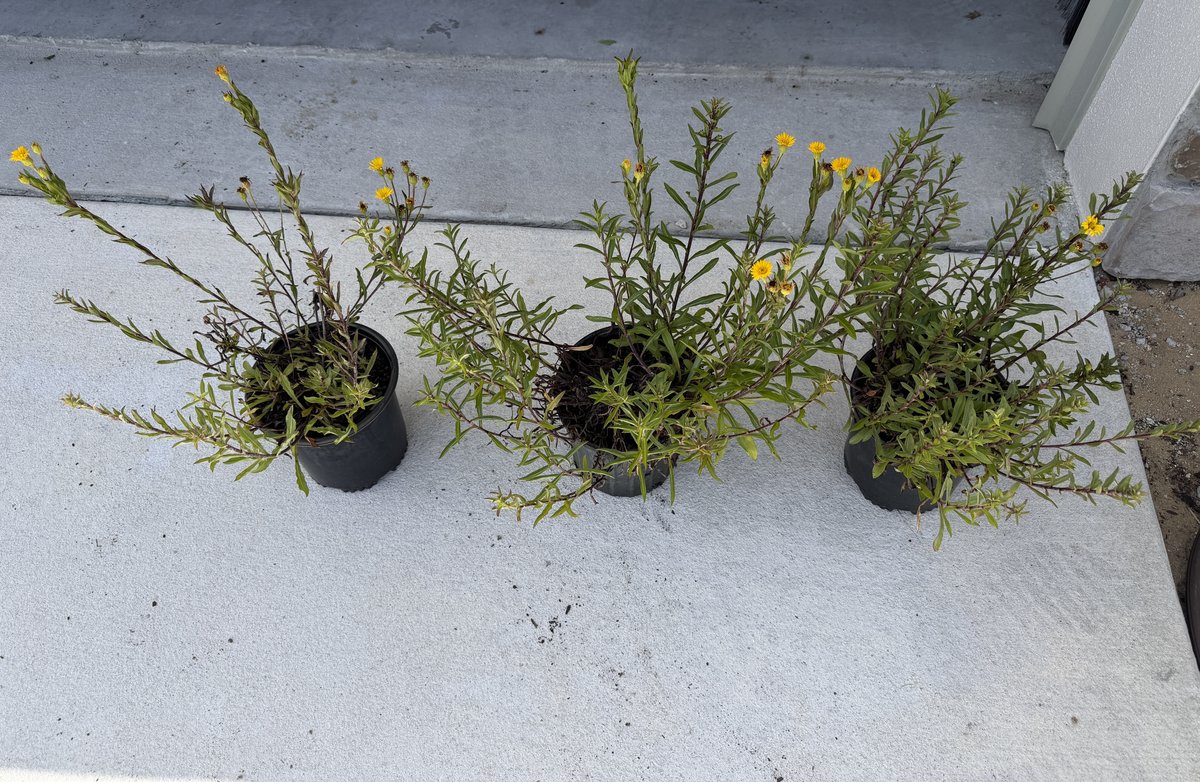
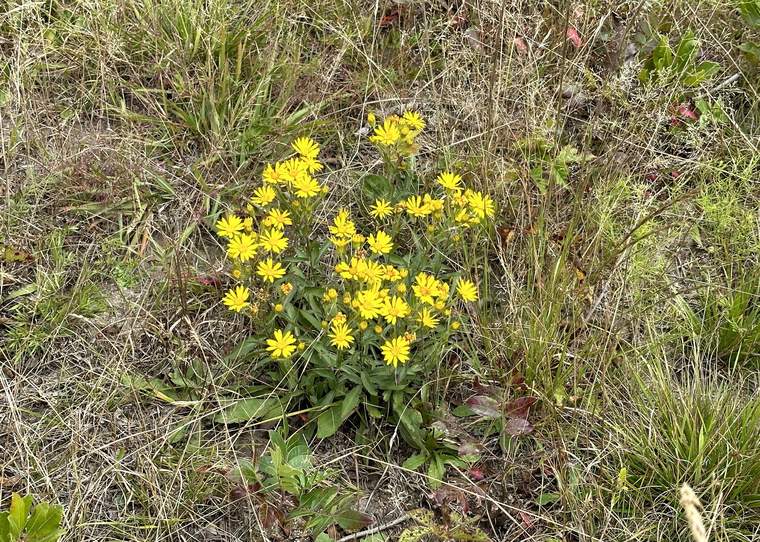
| # | Field | Value |
|---|---|---|
| 4 | Current status | In pot — 3× 1-gal nursery pots, purchased 2026-05-13 |
| 5 | Bloom time | Late summer–fall (Aug–Oct) [FNPS] |
| 6 | Bloom color | Showy yellow daisy-like flowers [FNPS] |
| 7 | Mature size (H × W) | 1–2 ft H × 1 ft W [FNPS] |
| 8 | Sun | Full sun to Part sun [FNPS] |
| 9 | Water needs | L (Low). Thrives in somewhat moist to moderately dry, well-drained soils; not tolerant of flooding [FNPS]. See legend section C. |
| 10 | Soil type and pH | Sandy or loamy; adapts to a range of pH. Native to dry-to-moist FL flatwoods. |
| 11 | USDA zone range | 8a–9b [FNPS] |
| 12 | Transplant window for zone 9b | Oct–Feb preferred; tolerates spring planting |
| 13 | Pollinator / wildlife value | Nectar source — highly attractive to diverse bees (green metallic, sweat, leafcutter, bumble, mining) and butterflies. Seed food for small birds [FNPS]. |
| 14 | Pest / disease quick notes | Few. Low salt tolerance. |
| 15 | Companion planting | Pairs with other xeric/upland wildflowers — Butterfly Weed FL (#3), White Beardtongue (#9), Pinebarren Goldenrod (#11). Short-lived perennial that spreads gradually to form small clusters [FNPS]. |
| 16 | Propagation | Seed [FNPS] |
| 17 | Maintenance notes | Deadhead spent flower spikes if you don't want self-seeding. Cut back in late winter. |
| 18 | Schedule — days between waterings when ESTABLISHED | 14 |
| 19 | Soil amendment — IN POT (now) | Skip or minimal ¼" top-dress one time. |
| 20 | Soil at transplant | Backfill with native sandy soil, unamended. No Revival Potting Soil. |
| 21 | Worm castings at transplant | After recovery, top-dress ¼", water in. |
| 22 | Ongoing feeding (post-established) | Optional ¼" top-dress in early spring. |
| 23 | Source | FNPS Chrysopsis mariana |
#7Slender GoldenrodSolidago stricta
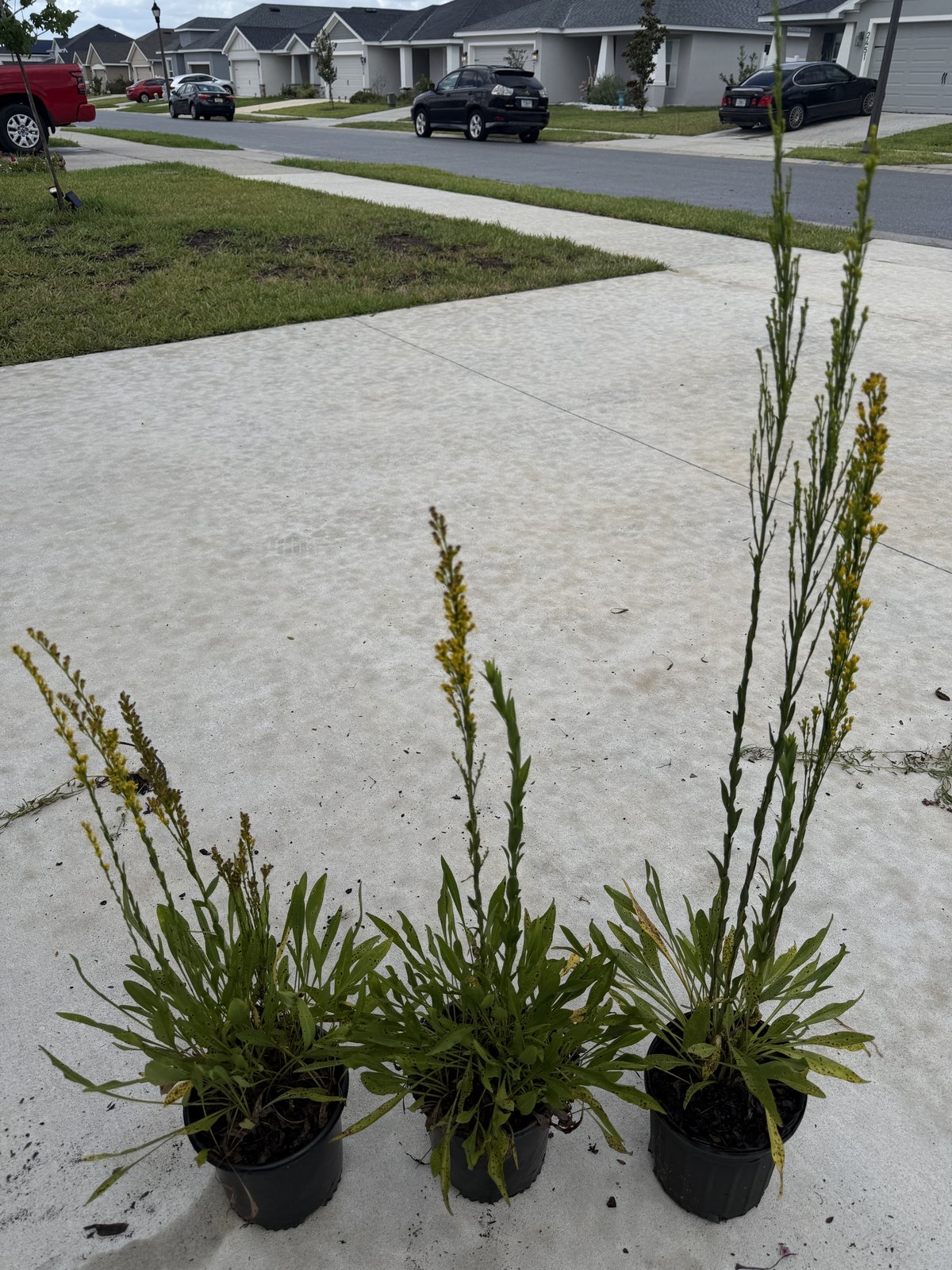
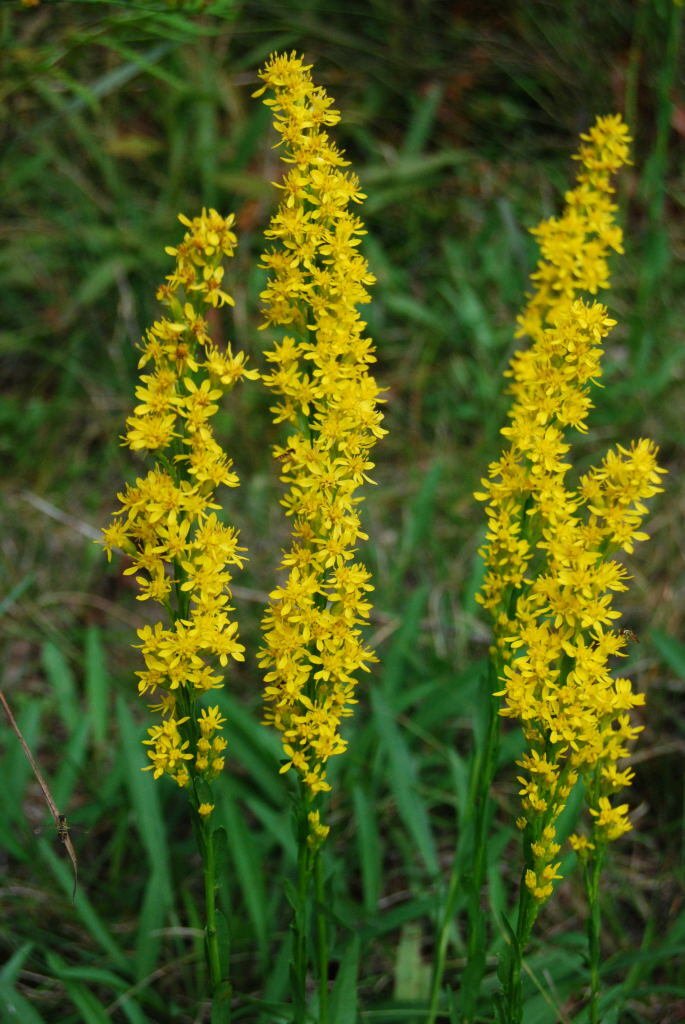
| # | Field | Value |
|---|---|---|
| 4 | Current status | In pot — 3× 1-gal nursery pots, purchased 2026-05-13 |
| 5 | Bloom time | Late summer–fall (Sep–Nov) [FNPS] |
| 6 | Bloom color | Bright yellow plumes on a slender, upright stalk [FNPS] |
| 7 | Mature size (H × W) | 3–5 ft H × ~1 ft W (narrow, vertical form) [FNPS] |
| 8 | Sun | Full sun to Part sun [FNPS] |
| 9 | Water needs | M (Medium). Prefers "usually moist, occasional inundation" but tolerates short dry periods [FNPS]. See legend section C. |
| 10 | Soil type and pH | Sand, clay, or loam; flexible pH [FNPS] |
| 11 | USDA zone range | 8a–9b [FNPS] |
| 12 | Transplant window for zone 9b | Oct–Feb |
| 13 | Pollinator / wildlife value | Nectar source for Monarch (Danaus plexippus) and many other butterflies; goldenrod soldier beetle; many native bees [FNPS]. Fall-bloom timing makes it critical for migrating Monarchs. |
| 14 | Pest / disease quick notes | Note: goldenrods do NOT cause hay fever — that's ragweed, which blooms at the same time and is often blamed [FNPS]. |
| 15 | Companion planting | Less aggressive than Pinebarren Goldenrod (#11) — spreads minorly via rhizomes but stays manageable. Good for mesic spots. Pairs with Pink Milkweed (#5), Pineland Purple (#12). |
| 16 | Propagation | Seed or division [FNPS] |
| 17 | Maintenance notes | Cut back to ground level in late winter. Divide every 3–4 years to keep clumps healthy. |
| 18 | Schedule — days between waterings when ESTABLISHED | 7 |
| 19 | Soil amendment — IN POT (now) | Optional ¼" top-dress one time. |
| 20 | Soil at transplant | Backfill with native sandy soil + optional ~10% worm castings (slightly more moisture-loving than xeric natives). |
| 21 | Worm castings at transplant | Top-dress ¼", water in. |
| 22 | Ongoing feeding (post-established) | ¼" top-dress in early spring. |
| 23 | Source | FNPS Solidago stricta |
#8Graceful Blazing StarLiatris gracilis
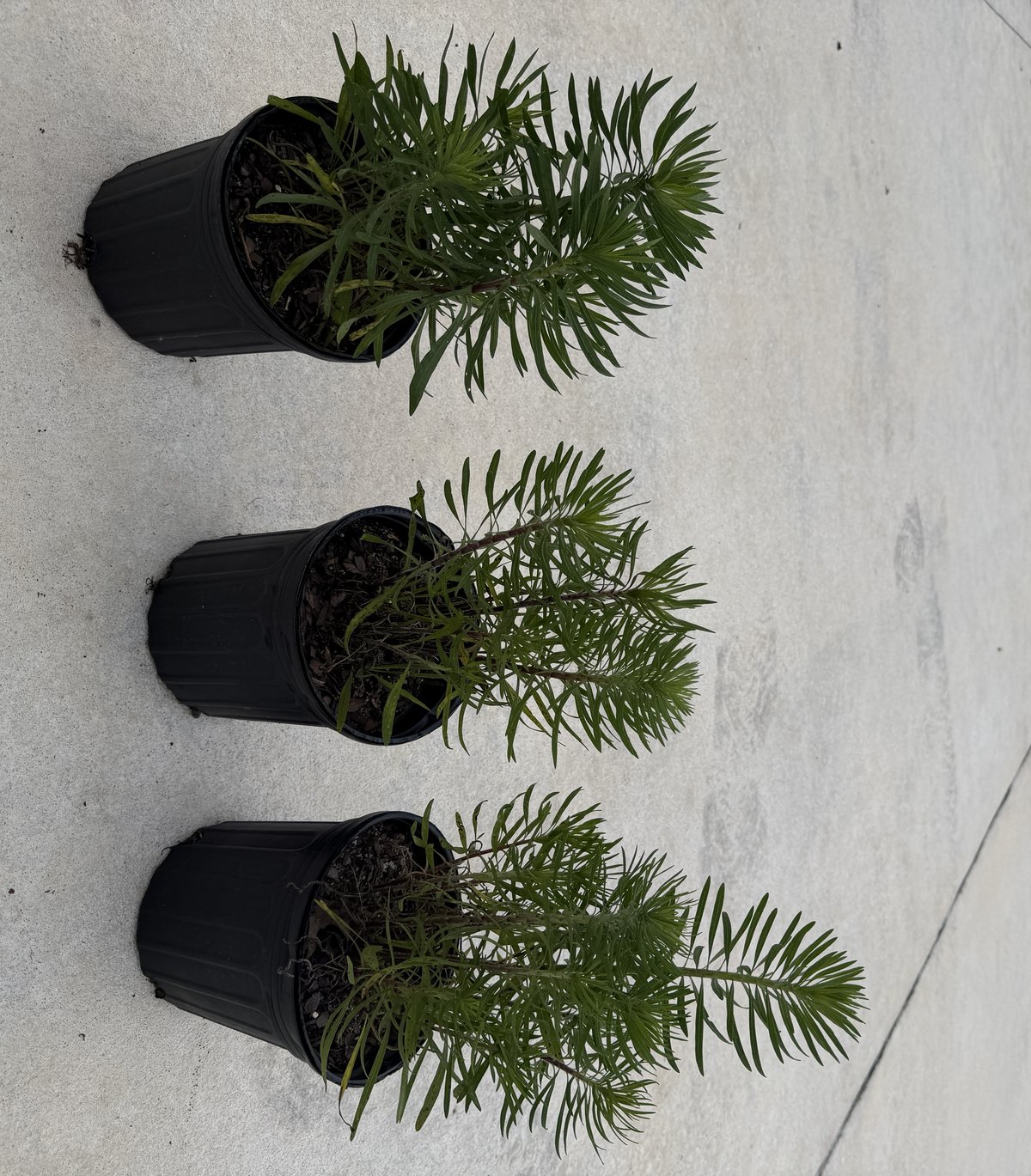
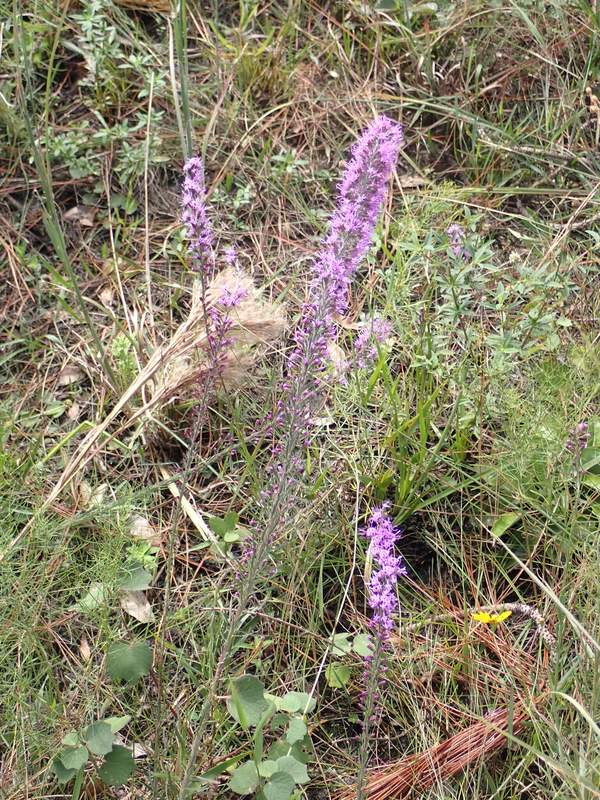
| # | Field | Value |
|---|---|---|
| 4 | Current status | In pot — 3× 1-gal nursery pots, purchased 2026-05-13 |
| 5 | Bloom time | Late summer–fall (Aug–Nov) [FNPS] |
| 6 | Bloom color | Rose to purple flowers on showy spikes [FNPS] |
| 7 | Mature size (H × W) | 2–4 ft H × ~1 ft W (narrow spike) [FNPS] |
| 8 | Sun | Full sun [FNPS] |
| 9 | Water needs | M (Medium). FNPS range: "somewhat moist, no flooding" through "somewhat long very dry periods" — adaptable [FNPS]. See legend section C. |
| 10 | Soil type and pH | Well-drained; adaptable pH. Native to mesic-to-wet flatwoods, seep slopes, bogs, savannas — likes moisture in the wild but doesn't require it in cultivation. |
| 11 | USDA zone range | 8a–11 [FNPS] |
| 12 | Transplant window for zone 9b | Oct–Feb. Liatris has a corm (bulb-like base) — handle gently when planting. |
| 13 | Pollinator / wildlife value | Nectar source — highly attractive to butterflies and bees [FNPS]. Fall bloom feeds late-season pollinators including migrating Monarchs. |
| 14 | Pest / disease quick notes | Few. Low salt tolerance. |
| 15 | Companion planting | Pairs with other wildflowers in a sunny mixed bed — Salvia (#10), Pineland Purple (#12), goldenrods. Architectural vertical accent — let it stand alone or in small drifts for visual impact. |
| 16 | Propagation | Seed (short-lived perennial — let it self-seed to maintain population) [FNPS] |
| 17 | Maintenance notes | Cut back spent flower spikes after bloom. Allow some seedheads to mature for self-seeding and bird food. |
| 18 | Schedule — days between waterings when ESTABLISHED | 10 |
| 19 | Soil amendment — IN POT (now) | Optional ¼" top-dress one time. |
| 20 | Soil at transplant | Backfill with native sandy soil, unamended. Plant the corm at the same depth it was in the pot. |
| 21 | Worm castings at transplant | Top-dress ¼", water in. |
| 22 | Ongoing feeding (post-established) | ¼" top-dress in early spring. |
| 23 | Source | FNPS Liatris gracilis |
#9White Beardtongue (Manyflower Beardtongue)Penstemon multiflorus
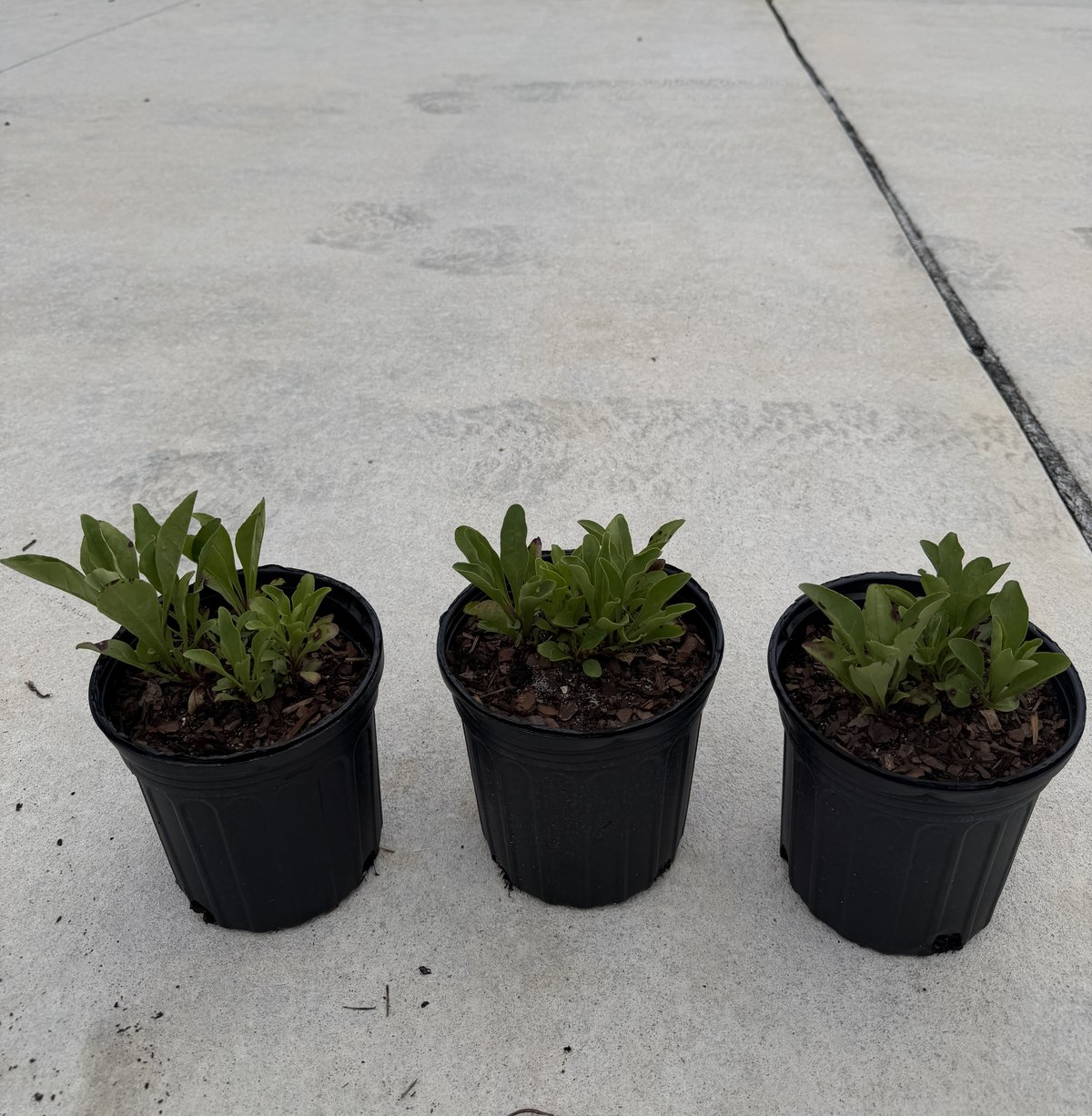
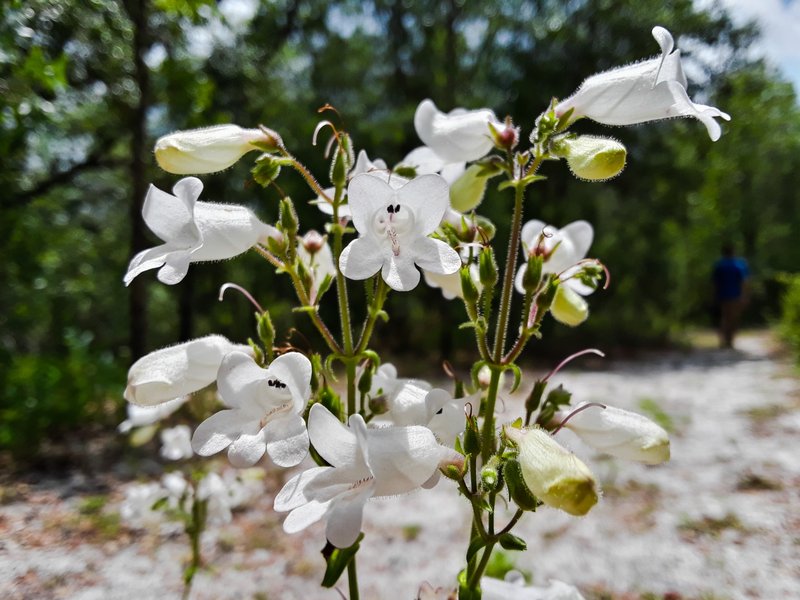
| # | Field | Value |
|---|---|---|
| 4 | Current status | In pot — 3× 1-gal nursery pots, purchased 2026-05-13 |
| 5 | Bloom time | Spring through fall (Mar–Oct) — long bloom season [FNPS] |
| 6 | Bloom color | White, tubular flowers on tall stalks [FNPS] |
| 7 | Mature size (H × W) | 1.5–3 ft H × 2–3 ft W [FNPS] |
| 8 | Sun | Full sun to Part sun [FNPS] |
| 9 | Water needs | L (Low). FNPS: "not wet but not extremely dry" through "very long very dry periods" — drought-tolerant [FNPS]. See legend section C. |
| 10 | Soil type and pH | Well-drained upland soils; pH 6.1–7.8 [FNPS] |
| 11 | USDA zone range | 8a–10b [FNPS] |
| 12 | Transplant window for zone 9b | Oct–Feb |
| 13 | Pollinator / wildlife value | Nectar source — attracts hummingbirds (occasionally), native bees, and butterflies [FNPS]. (FNPS also lists Baltimore checkerspot as larval host — likely a database error since that butterfly is northern; treat as nectar only.) |
| 14 | Pest / disease quick notes | Few. Low salt tolerance [FNPS]. Almost endemic to Florida — naturally occurs in dry flatwoods, sandhills, and ruderal areas. |
| 15 | Companion planting | Pairs with other xeric wildflowers — Butterfly Weed FL (#3), Maryland Goldenaster (#6), Pinebarren Goldenrod (#11). Spreads slowly via natural "pups" (offshoots) [FNPS]. |
| 16 | Propagation | Seed, cuttings, or natural pups [FNPS] |
| 17 | Maintenance notes | Dies back to few or no basal leaves in winter — normal, not dead. Cut spent flower stalks after bloom. |
| 18 | Schedule — days between waterings when ESTABLISHED | 14 |
| 19 | Soil amendment — IN POT (now) | Skip or minimal ¼" top-dress one time. |
| 20 | Soil at transplant | Backfill with native sandy soil, unamended. No Revival Potting Soil. |
| 21 | Worm castings at transplant | Top-dress ¼", water in. |
| 22 | Ongoing feeding (post-established) | Optional ¼" top-dress in early spring. |
| 23 | Source | FNPS Penstemon multiflorus |
#10Scarlet Sage (Red Sage / Tropical Sage)Salvia coccinea
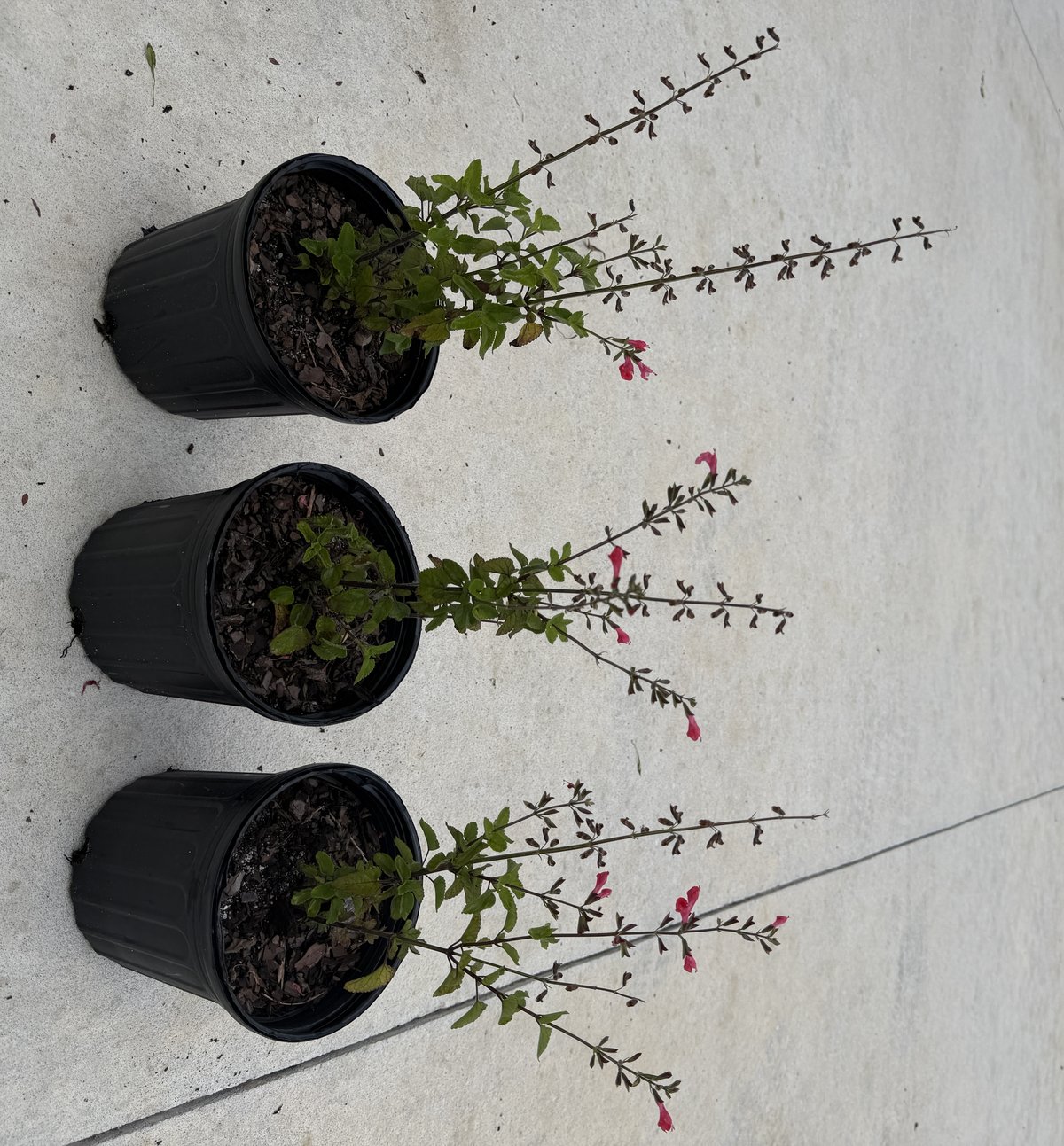
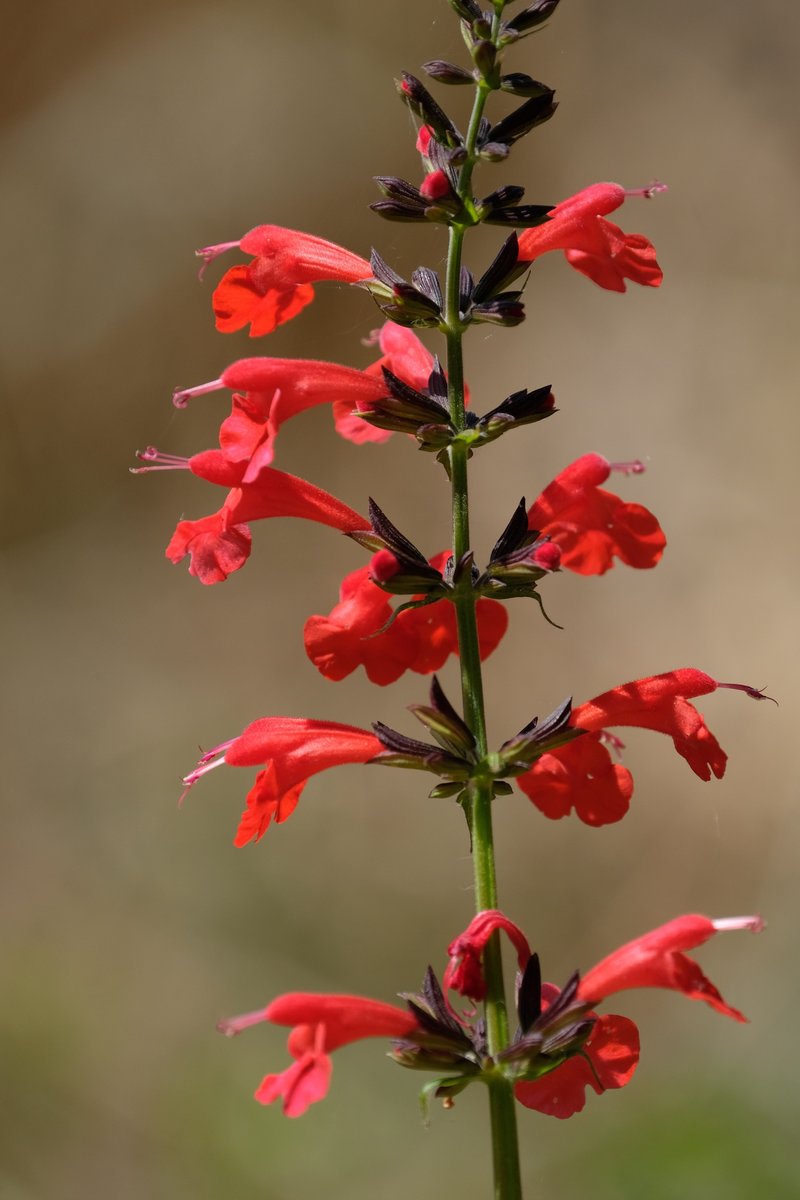
| # | Field | Value |
|---|---|---|
| 4 | Current status | In pot — 3× 1-gal nursery pots, purchased 2026-05-13 |
| 5 | Bloom time | "Can bloom at any time of year" in zone 9b — nearly year-round [FNPS] |
| 6 | Bloom color | Red (the common form); pink and white variants exist [FNPS] |
| 7 | Mature size (H × W) | 2–6 ft H × 0.5–2 ft W (variable) [FNPS] |
| 8 | Sun | Full sun to partial shade [FNPS] |
| 9 | Water needs | M (Medium). Tolerates "somewhat moist, no flooding" through "very long very dry periods" [FNPS]. See legend section C. |
| 10 | Soil type and pH | Sandy; pH 5.5–7.5 [FNPS] |
| 11 | USDA zone range | 8a–11 [FNPS] |
| 12 | Transplant window for zone 9b | Year-round in mild winters; spring and fall are easiest. Self-seeds readily so you'll have new plants. |
| 13 | Pollinator / wildlife value | Hummingbird magnet — the red tubular flowers are perfectly shaped for them. Also attracts butterflies, bumblebees, other pollinators, and nuthatches/warblers [FNPS]. |
| 14 | Pest / disease quick notes | Few. Aggressive self-seeder — FNPS notes it "can be fairly aggressive" reseeding [FNPS]. Pull volunteers in spots you don't want them, or transplant them. |
| 15 | Companion planting | Pairs with Graceful Blazing Star (#8) and Pink Milkweed (#5) for a hummingbird/butterfly combo. Plant where you can see it from the kitchen window — high traffic from pollinators is the show. Don't plant in tight beds unless you want volunteers everywhere. |
| 16 | Propagation | Self-seeds readily; collect seed by bagging spent flowers before they drop [FNPS] |
| 17 | Maintenance notes | Annual to short-lived perennial. In mild winters, mature plants persist but get leggy — cut back hard in late winter to refresh. Deadhead to extend bloom but leave some seed for next year. |
| 18 | Schedule — days between waterings when ESTABLISHED | 7 |
| 19 | Soil amendment — IN POT (now) | Optional ¼" top-dress one time. |
| 20 | Soil at transplant | Backfill with native sandy soil, unamended. No Revival Potting Soil. |
| 21 | Worm castings at transplant | Top-dress ¼", water in. |
| 22 | Ongoing feeding (post-established) | ¼" top-dress in early spring; light optional summer top-dress to support the long bloom season. |
| 23 | Source | FNPS Salvia coccinea |
#11Pinebarren GoldenrodSolidago fistulosa
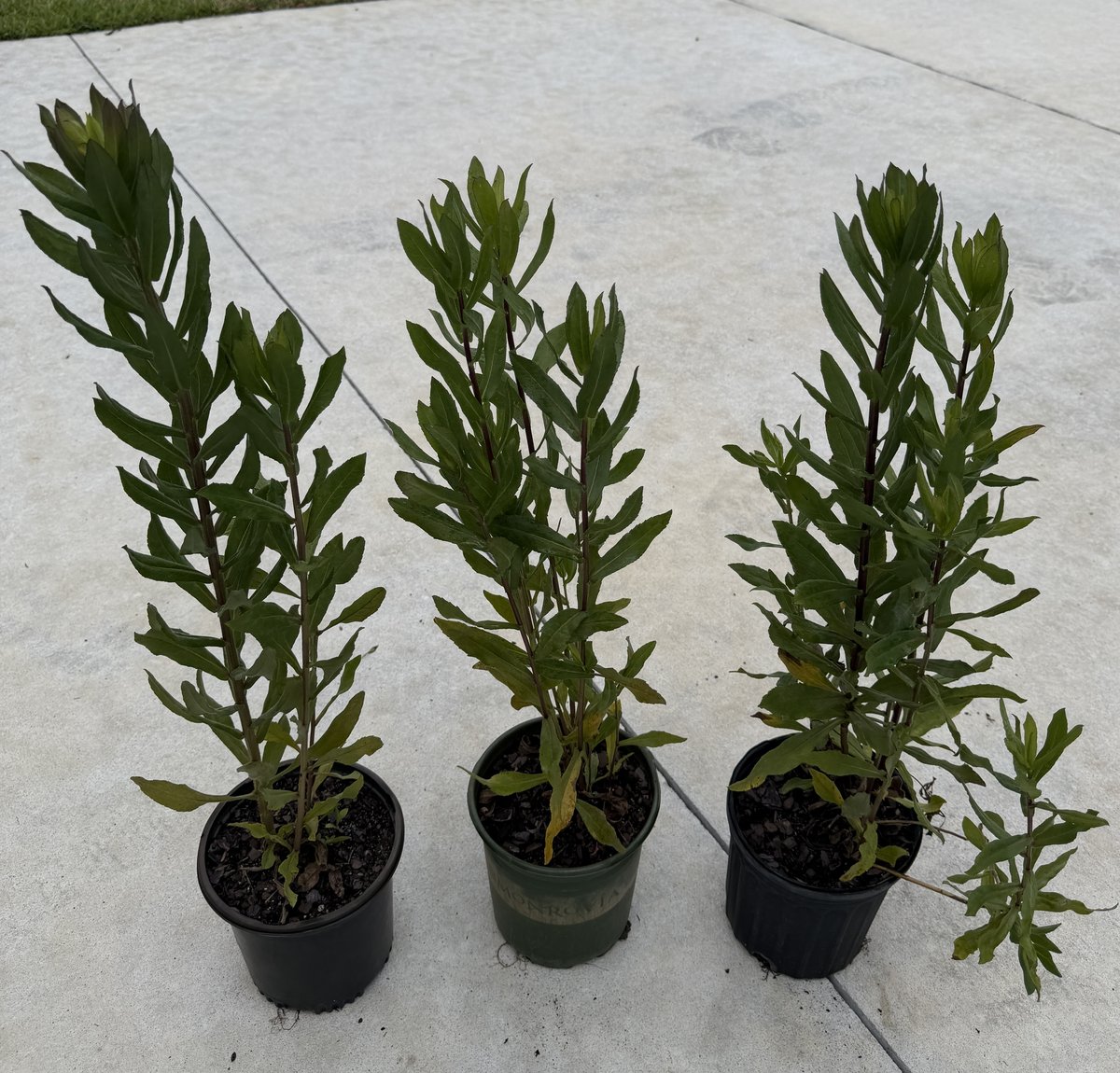
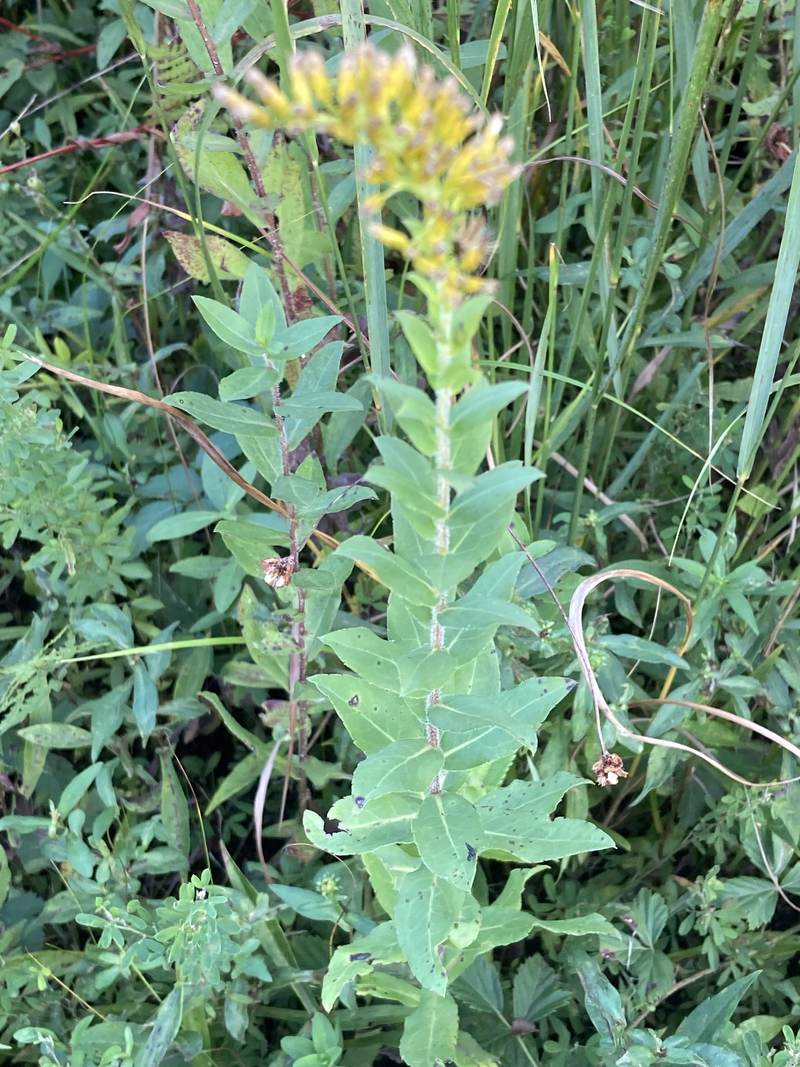
| # | Field | Value |
|---|---|---|
| 4 | Current status | In pot — 3× 1-gal nursery pots, purchased 2026-05-13 |
| 5 | Bloom time | Late summer–fall (Aug–Nov) |
| 6 | Bloom color | Bright yellow panicles on tall stems |
| 7 | Mature size (H × W) | 3–5 ft H × spreading via rhizomes (no fixed W — forms colonies) |
| 8 | Sun | Full sun (tolerates some shade) |
| 9 | Water needs | M (Medium). Best in consistently moist to wet soils; tolerates dry stretches. See legend section C. |
| 10 | Soil type and pH | Seasonally wet to dry sandy soils; wide tolerance. The most-common goldenrod in FL — adapts to almost anything. |
| 11 | USDA zone range | 8a–10b |
| 12 | Transplant window for zone 9b | Oct–Feb |
| 13 | Pollinator / wildlife value | Nectar source for an exceptional diversity of pollinators — Florida Wildflower Foundation describes goldenrods as a "keystone genus" with outsized value for native bees and honeybees. Fall bloom feeds migrating Monarchs. |
| 14 | Pest / disease quick notes | Aggressive rhizome spreader — forms dense stands. Do NOT plant in a small garden bed or near other species you want to thrive. FL Wildflower Foundation: "a very poor choice for small landscaped areas or in situations where a wide diversity of wildflowers is desired." |
| 15 | Companion planting | Plant in a dedicated area — back of garden, along a fence line, or in a wild meadow patch. Treat it like mint: contain it or give it its own zone. Do NOT plant near Slender Goldenrod (#7), Liatris (#8), or any wildflower you want to keep — it will out-compete them. |
| 16 | Propagation | Seed or division. Spreads vigorously via rhizomes [FL Wildflower Foundation]. |
| 17 | Maintenance notes | Cut back to ground in late winter. Edge or barrier (root barrier, edging) recommended to contain spread. Divide every 2–3 years if you want to control size. |
| 18 | Schedule — days between waterings when ESTABLISHED | 10 |
| 19 | Soil amendment — IN POT (now) | Skip or minimal ¼" top-dress. |
| 20 | Soil at transplant | Backfill with native sandy soil. Pick a "wild" area — don't amend richly or you'll fuel its spread. |
| 21 | Worm castings at transplant | Top-dress ¼", water in. |
| 22 | Ongoing feeding (post-established) | Skip ongoing feeding — this plant doesn't need help; feeding accelerates rhizome spread. |
| 23 | Source | FL Wildflower Foundation — Pinebarren Goldenrod · The Natives nursery catalog |
#12Pineland Purple (False Vanillaleaf)Trilisa subtropicana
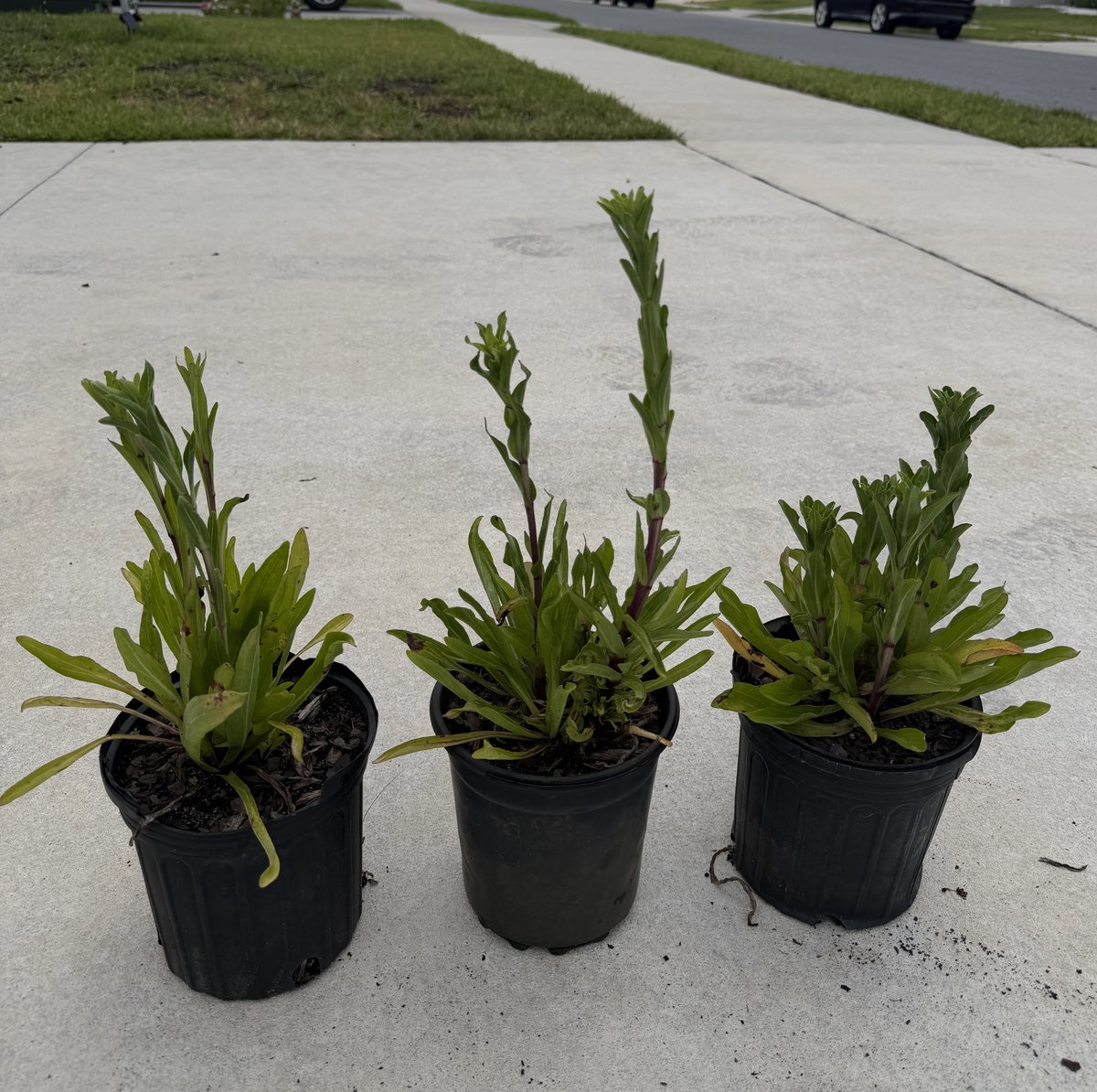
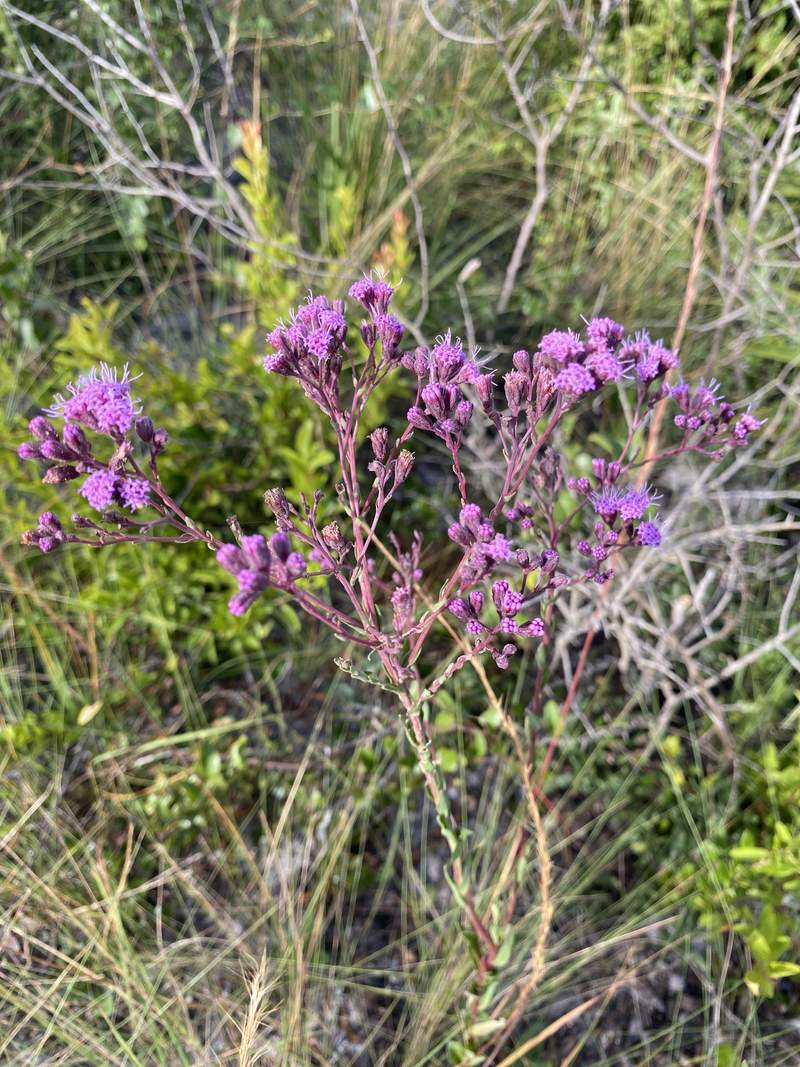
| # | Field | Value |
|---|---|---|
| 4 | Current status | In pot — 3× 1-gal nursery pots, purchased 2026-05-13 |
| 5 | Bloom time | Fall (Sep–Nov) |
| 6 | Bloom color | Stunning clusters of purple flowers |
| 7 | Mature size (H × W) | 2–4 ft H × 1 ft W |
| 8 | Sun | Full sun to part shade |
| 9 | Water needs | M (Medium). Likes moist to average soil; does NOT tolerate inundation; tolerates drought once established but may need watering during hot summer months. See legend section C. |
| 10 | Soil type and pH | Sandy, well-drained. Native to FL pine flatwoods and palmetto prairies. |
| 11 | USDA zone range | 8b–10b |
| 12 | Transplant window for zone 9b | Oct–Feb |
| 13 | Pollinator / wildlife value | Nectar source — heavy butterfly and bee attractor during the fall bloom (when many other plants are done). |
| 14 | Pest / disease quick notes | Endemic to central/south Florida — Davenport is right in the heart of its native range, so it should thrive. Treat as a regional treasure. |
| 15 | Companion planting | Pairs beautifully with Pinebarren Goldenrod (#11), Slender Goldenrod (#7), and Liatris (#8) for a purple/yellow fall display. |
| 16 | Propagation | Seed; division of mature clumps |
| 17 | Maintenance notes | Cut back spent flower spikes after fall bloom. Mulch lightly per legend section F. |
| 18 | Schedule — days between waterings when ESTABLISHED | 7 |
| 19 | Soil amendment — IN POT (now) | Optional ¼" top-dress one time. |
| 20 | Soil at transplant | Backfill with native sandy soil + optional ~10% worm castings (likes slightly richer than the xeric natives). |
| 21 | Worm castings at transplant | Top-dress ¼", water in. |
| 22 | Ongoing feeding (post-established) | ¼" top-dress in early spring. |
| 23 | Source | Wilcox Nursery — Pineland Purple · iNaturalist — Carphephorus odoratissimus var. subtropicanus · The Natives nursery catalog |
#14Yellow BulbineBulbine frutescens
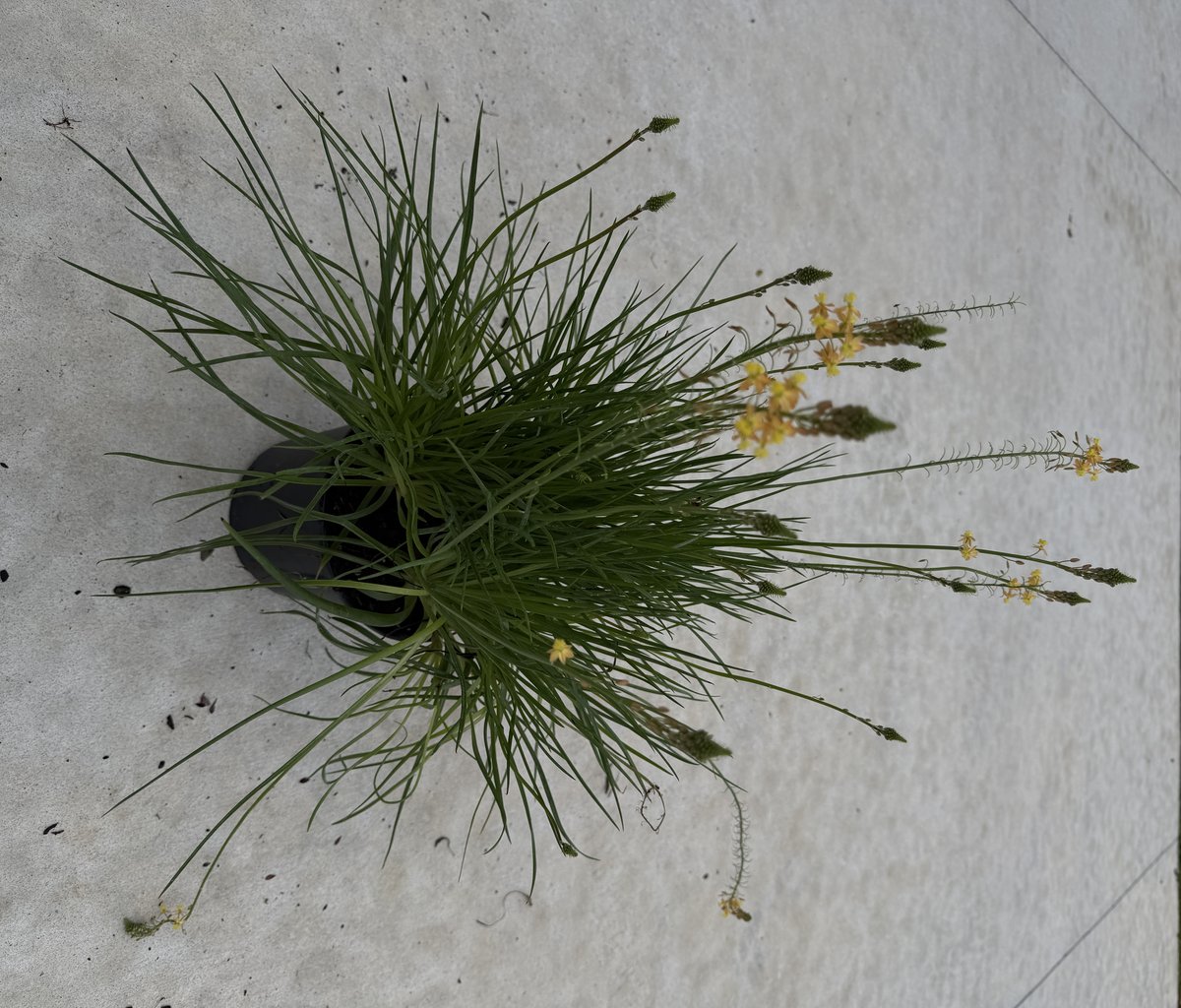
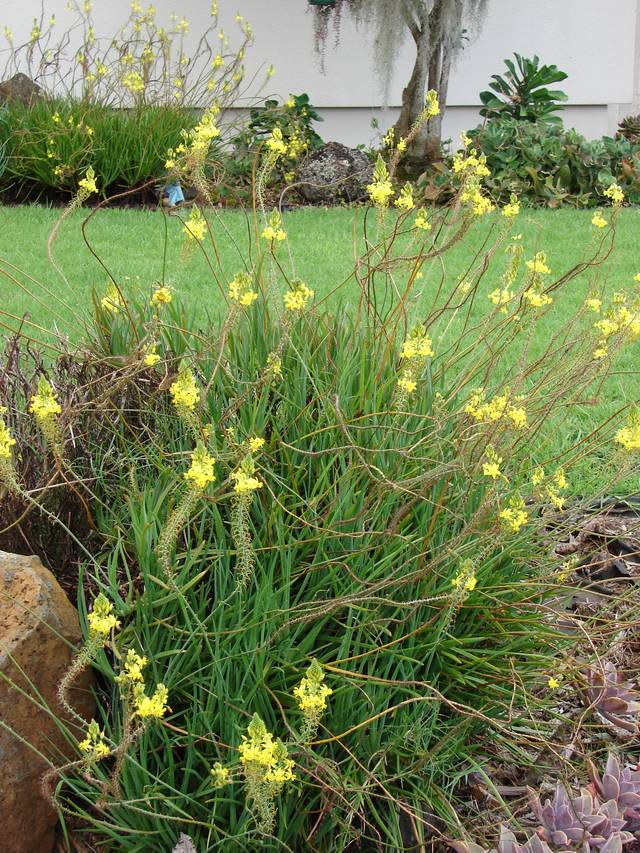
| # | Field | Value |
|---|---|---|
| 4 | Current status | In pot — 1× 1-gal nursery pot, purchased 2026-05-17 (Lowe's) |
| 5 | Bloom time | Nearly year-round in zone 9b — spring through summer with brief mid-summer dormancy in extreme heat, then fall–winter rebloom |
| 6 | Bloom color | Dainty golden-yellow flowers on 2-ft stalks (Edgar's plant confirmed yellow, not orange) |
| 7 | Mature size (H × W) | 1–1.5 ft H × 2–3 ft W (low spreading shrub-like succulent) |
| 8 | Sun | Full sun to Part sun. Tolerates afternoon shade in hot regions; too much sun can burn leaf tips. |
| 9 | Water needs | L (Low). Drought-tolerant once established — water every 2–4 weeks depending on temperature. Until established, water weekly. See legend section C. |
| 10 | Soil type and pH | Well-draining sandy soil — succulent; rots in wet feet. Tolerates dry, sandy FL conditions extremely well. |
| 11 | USDA zone range | 9–11 (grown as annual in colder zones). Davenport's 9b at lower edge — protect from hard freezes. |
| 12 | Transplant window for zone 9b | Year-round; spring (Mar–May) is easiest for new plantings |
| 13 | Pollinator / wildlife value | Nectar source for bees. Not a larval host. Not native — modest ecological value. |
| 14 | Pest / disease quick notes | Root rot in wet soils — the single biggest killer. Pests rare. Cold damage below ~30°F. |
| 15 | Companion planting | Pairs with other drought-tolerant ornamentals or xeric natives. Plant in well-drained spot away from irrigation that would water it constantly. From this inventory, group with sun-loving xeric natives like Butterfly Weed (#3) or Maryland Goldenaster (#6). |
| 16 | Propagation | Division of rhizomes (easy); cuttings root readily |
| 17 | Maintenance notes | Cut spent flower stalks at base. Divide every 2–3 years to keep clumps vigorous. Watch drainage in summer rains — raise the bed or amend with sand if soil holds water. |
| 18 | Schedule — days between waterings when ESTABLISHED | 14 (L-range; lean dry — Bulbine is a succulent and prefers drought between waterings) |
| 19 | Soil amendment — IN POT (now) | Per Revival label "Established potted plants" — ornamental cadence applies. Top-dress ¼" worm castings every 4–6 weeks. This is the ornamental dosing — unlike the natives, Bulbine benefits from regular feeding. |
| 20 | Soil at transplant | Backfill = 50/50 native sandy soil + Revival Potting Soil if you want to amend, OR straight sandy soil if drainage is already excellent. The Revival mix's pumice/rice hulls aid drainage — good for a succulent. |
| 21 | Worm castings at transplant | After 1–2 weeks recovery, top-dress ½" around the rootball, water in. [Revival label "Planting/transplanting potted plants" — 10–25%] |
| 22 | Ongoing feeding (post-established) | Top-dress ¼" every 4–6 weeks during growing season (Mar–Oct). Pause Nov–Feb. |
| 23 | Source | Gardening Know How — Bulbine Care · World of Succulents — Bulbine · Revival Gardening worm-castings bag label |
#15DillAnethum graveolens
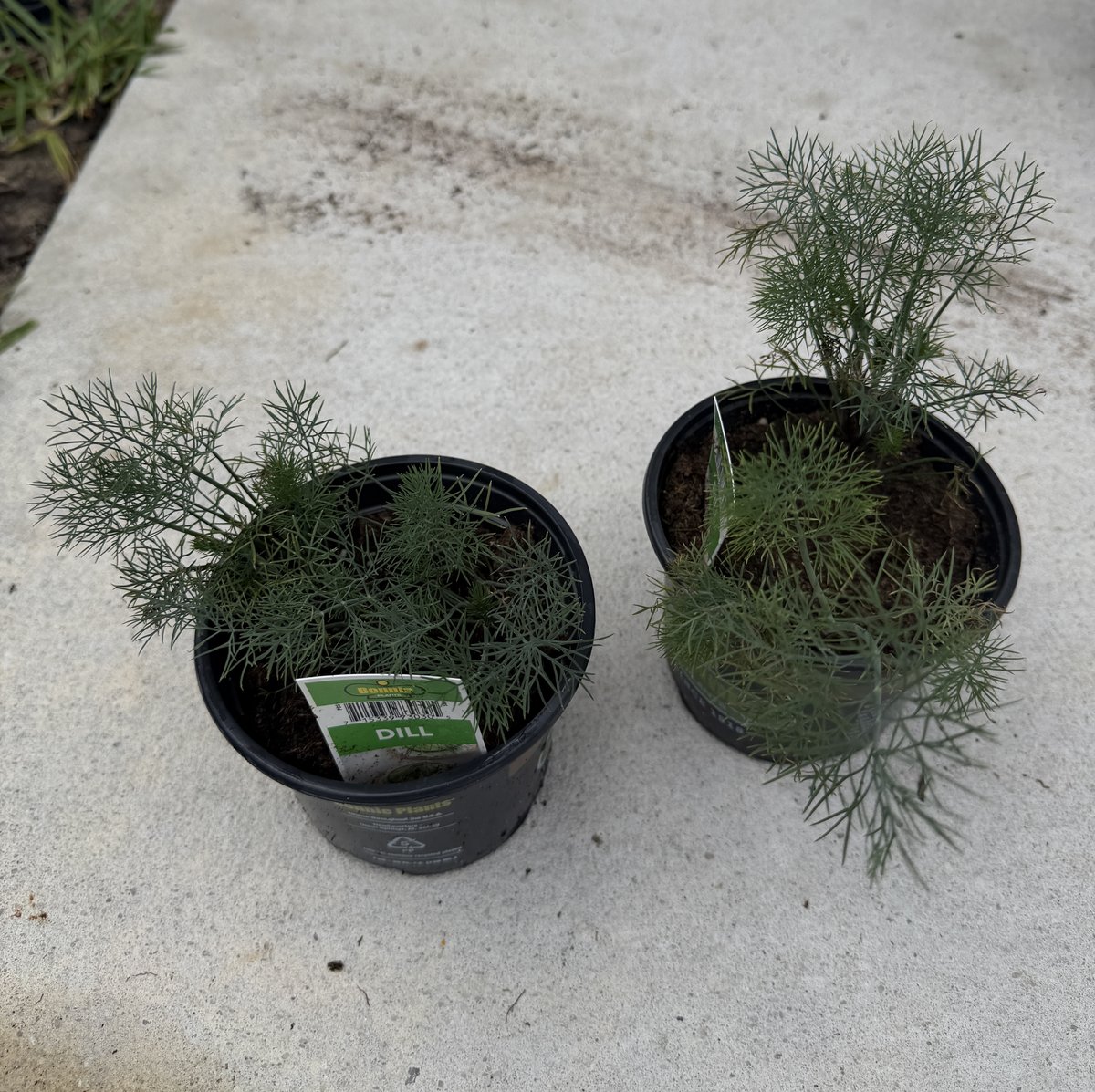
| # | Field | Value |
|---|---|---|
| 4 | Current status | In pot — 2× 19.3 oz Bonnie Plants pots, purchased 2026-05-17 (Lowe's) |
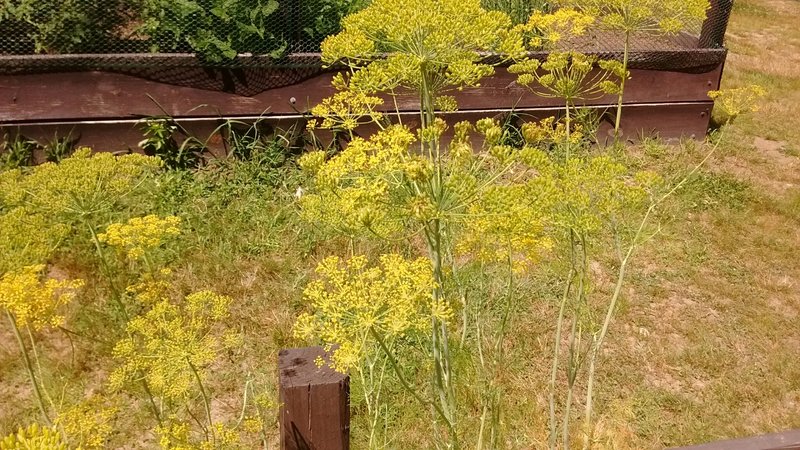
| 5 | Bloom time | Late spring–summer (flowers signal bolting — see maintenance notes) |
| 6 | Bloom color | Yellow umbel (flat-topped flower clusters); produces dill seed in late summer |
| 7 | Mature size (H × W) | 12–24 in H × 12 in W ('Fernleaf' is compact, slower to bolt than standard dill) |
| 8 | Sun | Full sun to Part sun [Bonnie Plants] |
| 9 | Water needs | M (Medium). Check soil moisture before watering; well-draining soil essential [Bonnie Plants]. |
| 10 | Soil type and pH | Loamy, well-drained; pH 5.5–6.5 (slightly acidic). Tolerates sandy FL soil if amended with organic matter. |
| 11 | USDA zone range | Cool-season annual. Grown year-round in zone 9b with seasonal timing (cool-season planting). |
| 12 | Transplant window for zone 9b | Cool season — Oct through Feb is optimal. May–Sep is too hot — dill bolts (flowers and goes to seed) quickly in heat. Edgar's May purchase means short window before bolting. |
| 13 | Pollinator / wildlife value | Larval host for Black Swallowtail butterfly (Papilio polyxenes) — caterpillars eat the foliage. Plant extra to share with caterpillars (one for you, one for them). Also nectar source from umbel flowers for many small pollinators. |
| 14 | Pest / disease quick notes | Black Swallowtail caterpillars are a feature, not a pest — let them be. Aphids occasionally. Bolting in summer heat = end of culinary harvest. |
| 15 | Companion planting | Classic companion plant — pairs with vegetables, basil, fennel (not in this inventory). Repels some pests. From this inventory: no specific pairings — keep separately as a culinary herb container. |
| 16 | Propagation | Seed (direct-sow; doesn't transplant well as it has a taproot). Bonnie Plants starts are already in their permanent containers — best to up-pot into a larger container or plant the whole rootball into the ground without disturbing it. |
| 17 | Maintenance notes | Harvest leaves regularly to delay bolting. Once flower stalks appear, leaves get bitter — at that point, let it bloom for the butterflies and harvest seed when umbels dry. Cool-season treatment in FL — replant from seed in fall for winter harvest. |
| 18 | Schedule — days between waterings when ESTABLISHED | 3 (annual; needs consistent moisture; in pots in FL summer may need daily) |
| 19 | Soil amendment — IN POT (now) | "Benefits from regular feeding with plant food" [Bonnie Plants]. Top-dress ¼" worm castings now and every 4–6 weeks. Ornamental cadence — full Revival label dose. |
| 20 | Soil at transplant | Backfill with Revival Potting Soil straight, or 70/30 Revival + native sandy soil. Dill loves richer soil than the natives. Container option: full Revival Potting Soil in a 1–2 gal container. |
| 21 | Worm castings at transplant | Top-dress ½" after planting recovery, water in. |
| 22 | Ongoing feeding (post-established) | ¼" top-dress every 4–6 weeks during active growth. Pause during bolting. Annual replanting from seed in fall = restart cycle. |
| 23 | Source | Bonnie Plants — Dill · Revival Gardening worm-castings bag label |
#16Angelonia 'Archangel Pink' (Summer Snapdragon)Angelonia angustifolia
| # | Field | Value |
|---|---|---|
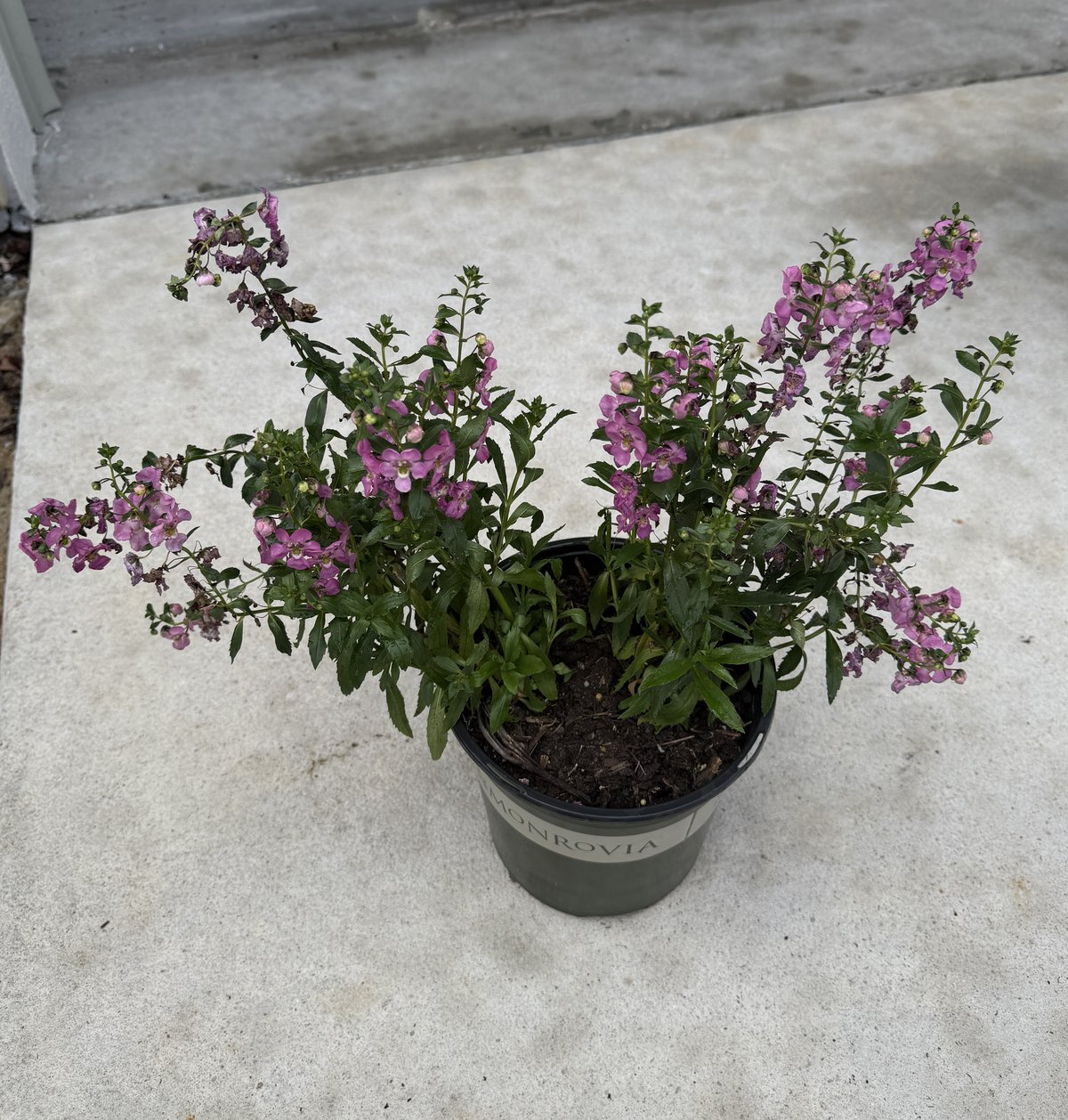
| 4 | Current status | In pot — 1× 1-gal nursery pot, purchased 2026-05-17 (Lowe's) |
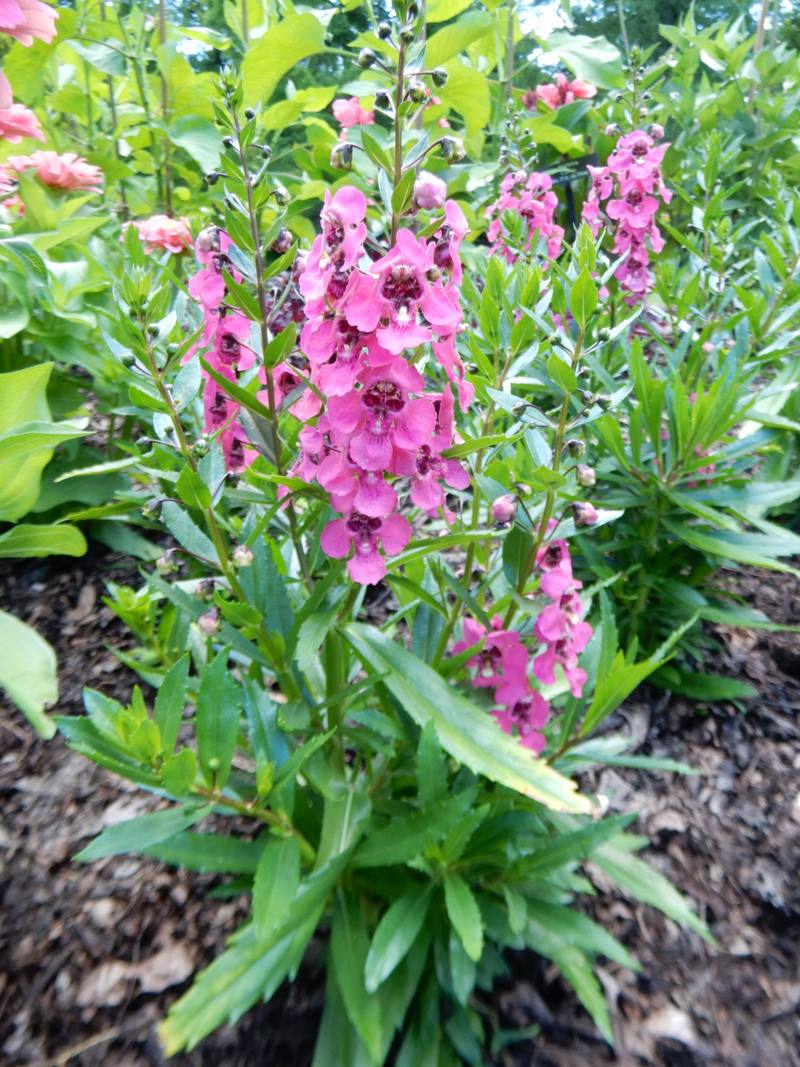
| 5 | Bloom time | Late spring through summer/fall — blooms continuously without deadheading in warm weather |
| 6 | Bloom color | Pink (cultivar selection); flower color intensity varies with sun (deeper in full sun) |
| 7 | Mature size (H × W) | 12–14 in H × 10–12 in W ('Archangel Pink' cultivar) — taller forms reach 24–36 in in FL conditions |
| 8 | Sun | Full sun (6–8+ hrs) — best bloom color and density |
| 9 | Water needs | M (Medium). 2–3× weekly for first 3 weeks; weekly after that. Let top inch of soil dry between waterings. Water at the base — keep leaves dry. See legend section C. |
| 10 | Soil type and pH | Moist, fertile, well-drained; pH 5.5–6.5 |
| 11 | USDA zone range | Tender perennial in 9–11; annual in colder zones. Davenport's 9b = perennial behavior expected, may die back in coldest snaps and return. |
| 12 | Transplant window for zone 9b | Mar–May for new plantings; will bloom through summer and into fall |
| 13 | Pollinator / wildlife value | Nectar source for bees, butterflies, and hummingbirds — surprisingly good pollinator value for an ornamental. Not a larval host. Deer-resistant. |
| 14 | Pest / disease quick notes | Few pests. Heat and humidity tolerant — performs well in FL summers when many other annuals fail. |
| 15 | Companion planting | Pairs with Scarlet Sage (#10) for a pink/red hummingbird zone. Also nice with Hibiscus (#17/#18/#19) as the lower-tier color around shrubs. |
| 16 | Propagation | Cuttings; seed is slow and rarely true to cultivar (hybrids don't reproduce from seed reliably) |
| 17 | Maintenance notes | No deadheading required — that's a feature. Cut back by ⅓ if it gets leggy mid-summer to refresh. Mulch lightly. |
| 18 | Schedule — days between waterings when ESTABLISHED | 5 (M-range; consistent moisture for continuous bloom) |
| 19 | Soil amendment — IN POT (now) | Top-dress ¼" every 4–6 weeks per Revival label "Established potted plants" — ornamental cadence. |
| 20 | Soil at transplant | Backfill = 50/50 native sandy soil + Revival Potting Soil, OR full Revival in a container. Angelonia wants richer soil than the natives. |
| 21 | Worm castings at transplant | Top-dress ½" after recovery, water in. |
| 22 | Ongoing feeding (post-established) | ¼" top-dress monthly during bloom season (Apr–Oct). Espoma Flower-Tone or similar balanced fertilizer per package directions as a supplement is fine. |
| 23 | Source | NC Extension — Angelonia angustifolia · Garden Design — Angelonia Plant Care · Revival Gardening worm-castings bag label |
#17Tropical Hibiscus — Red Bush 'President'Hibiscus rosa-sinensis
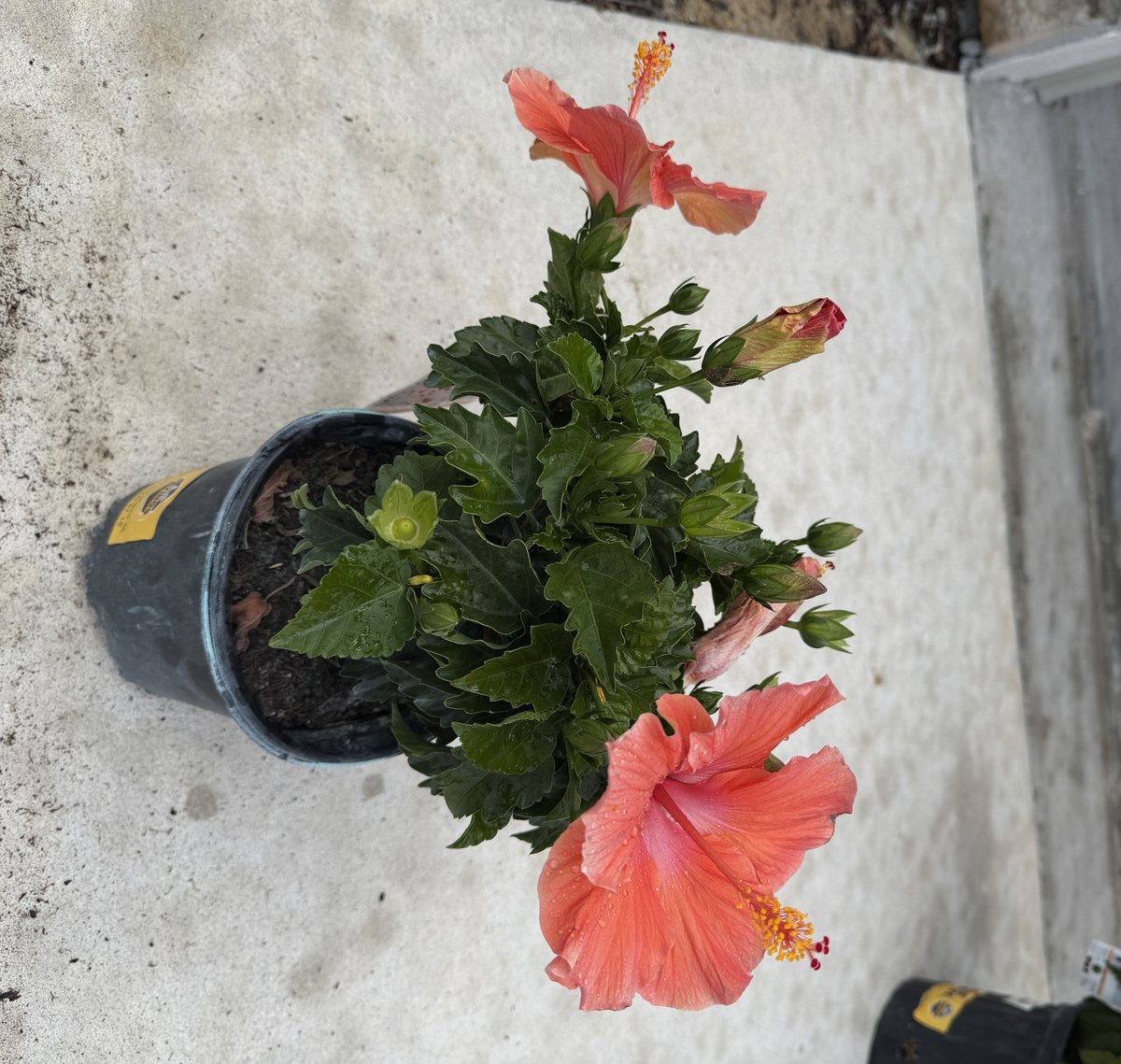
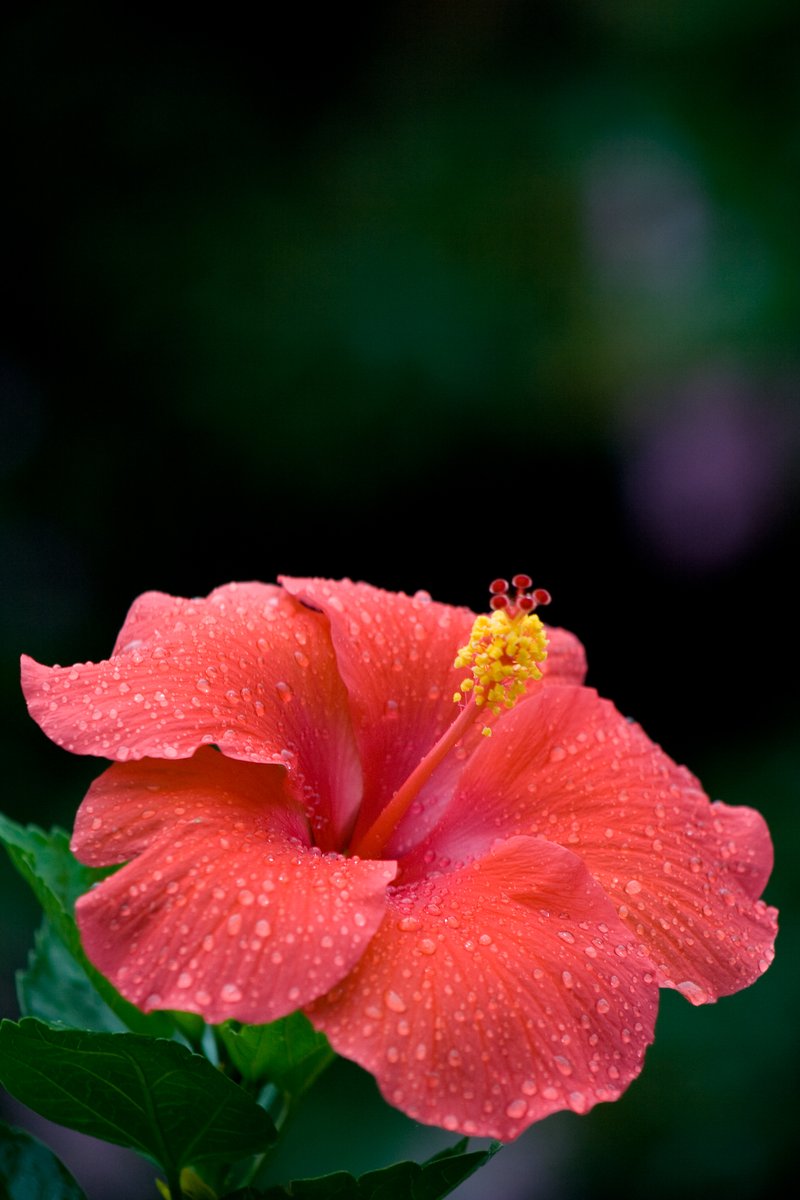
| # | Field | Value |
|---|---|---|
| 4 | Current status | In pot — 1× 1-gal nursery pot (2.5 qt actual), purchased 2026-05-17 (Lowe's item 970590) |
| 5 | Bloom time | Year-round in warm weather; pauses below ~60°F. Each flower lasts 1 day; new buds open daily. |
| 6 | Bloom color | Red (confirmed; standard tropical hibiscus form) |
| 7 | Mature size (H × W) | 4–8 ft H × 4–6 ft W as a free-form bush; smaller if kept in container and pruned |
| 8 | Sun | Full sun (6+ hrs). More sun = more flowers. Tolerates light shade with reduced bloom. |
| 9 | Water needs | M–H (Medium-to-High). ~1 inch of water per week during growing season; in containers in FL summer, may need daily watering. See legend section C. |
| 10 | Soil type and pH | Rich, well-drained; pH 6.0–7.0 (slightly acidic to neutral) |
| 11 | USDA zone range | 9–11. Davenport's 9b is at the cold edge — sensitive to temperatures below 50°F; freezes damage or kill the plant. Plan for winter protection (see maintenance notes). |
| 12 | Transplant window for zone 9b | Mar–May (after last frost risk); avoid summer transplant if possible. Keep in containers for first winter to allow indoor protection during cold snaps. |
| 13 | Pollinator / wildlife value | Nectar source for hummingbirds, butterflies, and bees — large showy flowers attract significant pollinator traffic. Not a larval host. |
| 14 | Pest / disease quick notes | Aphids, scale, whitefly, and mealybugs are common — inspect weekly. Treat with insecticidal soap or horticultural oil. Yellow leaves can signal over-watering, nutrient deficiency, or cold stress. |
| 15 | Companion planting | Plant as a specimen or group three Hibiscus together (#17 red, #18 yellow, #19 red) for a tropical color block. Angelonia (#16) at the base for low color, Scarlet Sage (#10) for a hummingbird combo. |
| 16 | Propagation | Softwood cuttings (3–6 in stem, dipped in rooting hormone, in moist potting mix); seeds rarely true to parent cultivar |
| 17 | Maintenance notes | Winter protection is critical in Davenport. Below 50°F → cover with frost cloth or bring containerized plants indoors near a sunny window. Reduce watering and fertilizer in winter. Prune in early spring (Feb–Mar) to shape — cut back by ⅓ to encourage bushy growth and bloom. Mulch heavily for root insulation. |
| 18 | Schedule — days between waterings when ESTABLISHED | 3 (M–H range; in pot in FL summer = daily) |
| 19 | Soil amendment — IN POT (now) | Top-dress ¼" worm castings every 4–6 weeks per Revival label. Supplement with high-potassium, low-phosphorus fertilizer (e.g., 12-4-18 or hibiscus-specific) every 2 weeks during growing season — hibiscus is a heavy feeder but phosphorus ties up nutrients it needs, so low-P formulations are critical. |
| 20 | Soil at transplant | Backfill = full Revival Potting Soil in a container (12+ inch pot recommended), OR amended in-ground bed (50/50 Revival + native sand, plus a handful of compost). Hibiscus loves rich, moisture-retentive but well-drained soil — opposite of the natives. |
| 21 | Worm castings at transplant | Top-dress 1 inch after recovery (full Revival label dose for "New or transplanted shrubs, berries"), water in well, mulch heavily. |
| 22 | Ongoing feeding (post-established) | ¼" worm castings monthly spring through fall + biweekly liquid feed of low-P high-K fertilizer per package directions. Pause heavy feeding in winter; light monthly only if growing. |
| 23 | Source | UF/IFAS — Hibiscus in Florida (PDF) · Tropical Plants of Florida — Tropical Hibiscus Care · Council-Oxford — Fertilizing Hibiscus in Florida · Revival Gardening worm-castings bag label |
#18Tropical Hibiscus — Yellow BushHibiscus rosa-sinensis
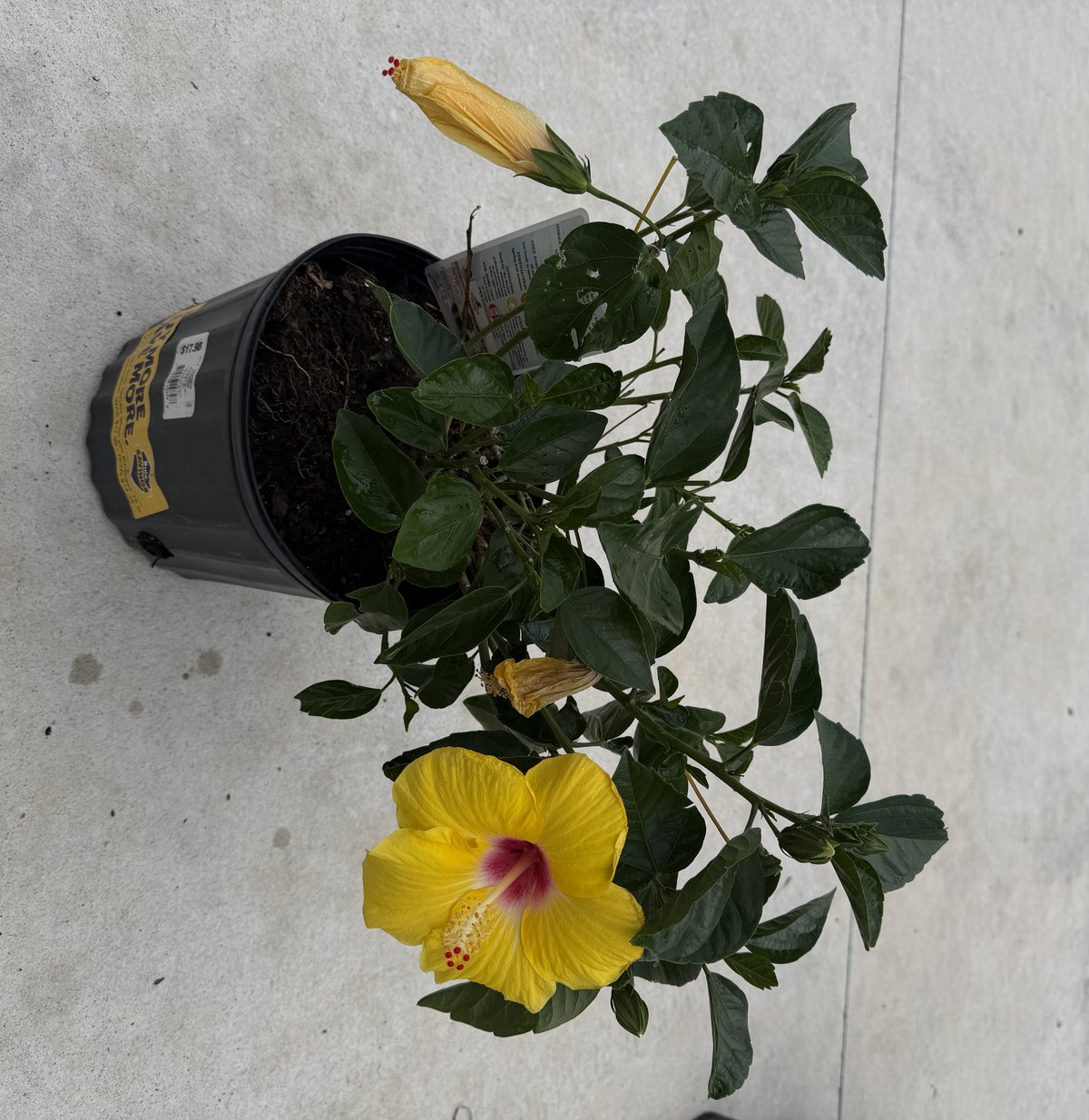
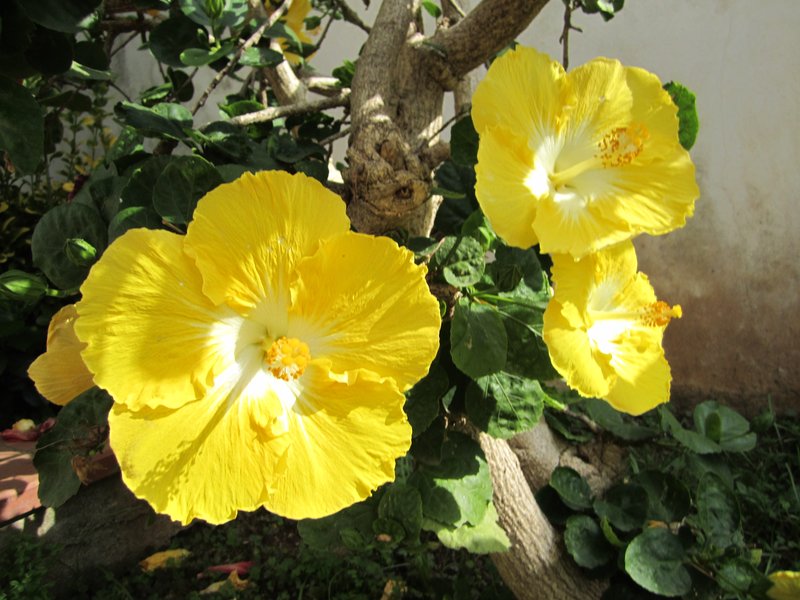
Same species and care as #17 (see above), with these differences:
| # | Field | Value |
|---|---|---|
| 4 | Current status | In pot — 1× 2-gal nursery pot (1.72 gal actual), purchased 2026-05-17 (Lowe's item 4892608) |
| 6 | Bloom color | Yellow |
| 7 | Mature size (H × W) | 4–8 ft H × 4–6 ft W (same as #17) |
| — | All other fields | Same as #17 — Tropical Hibiscus Red Bush. Pot size is the only material difference (1.72 gal vs 2.5 qt); plant is slightly larger now and likely transitions to established status sooner. |
| 23 | Source | Same as #17 |
#19Tropical Hibiscus — Red Bush 'President' (second specimen)Hibiscus rosa-sinensis
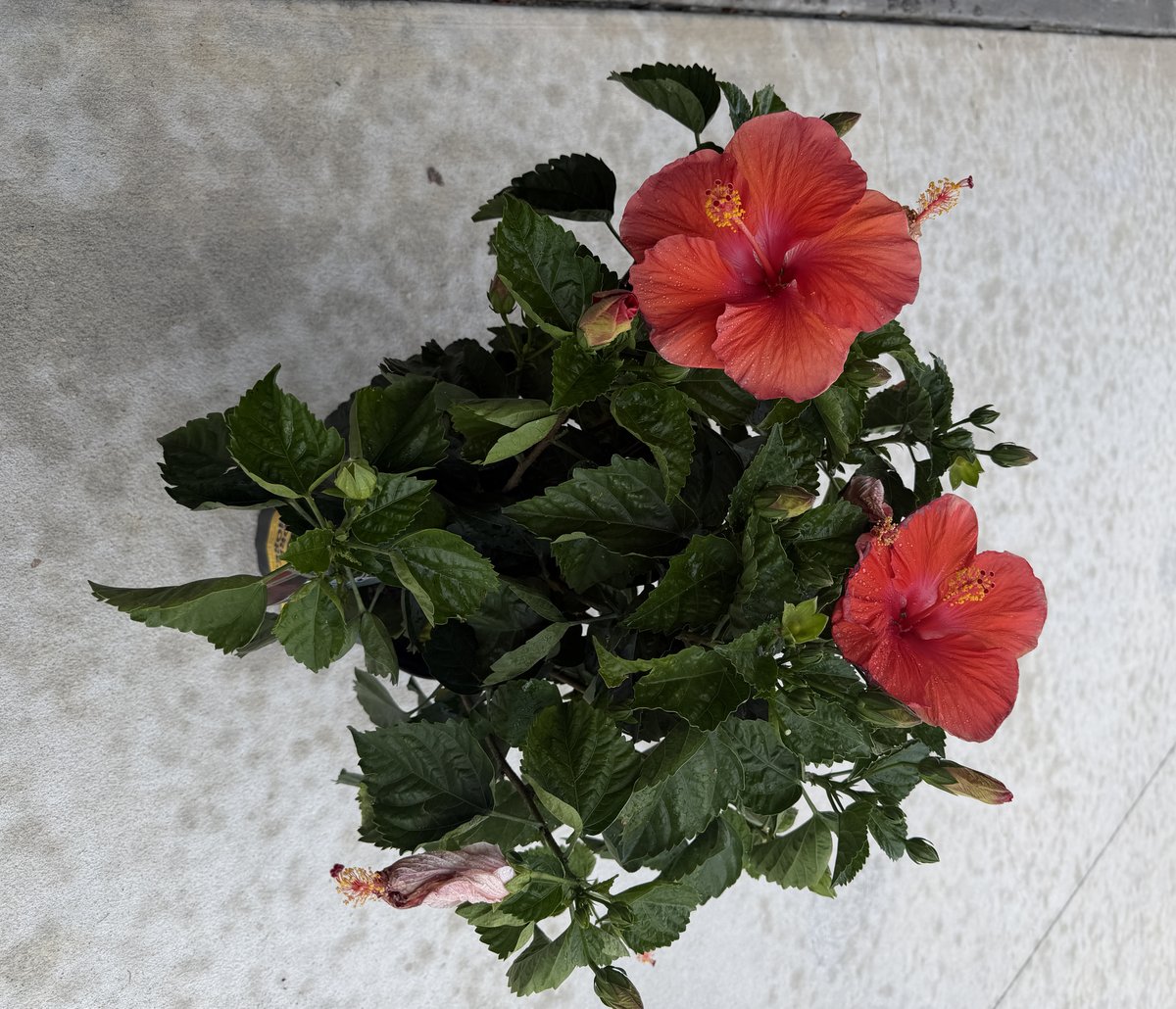
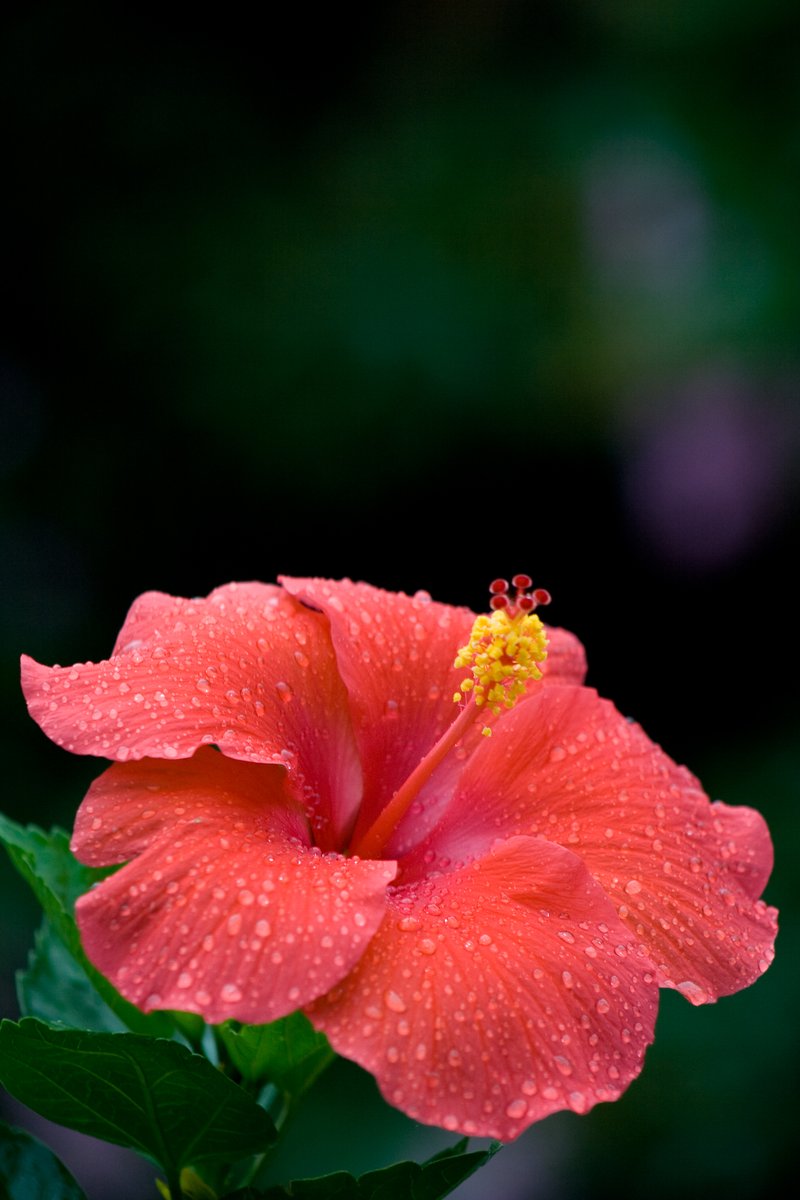
Same species and care as #17:
| # | Field | Value |
|---|---|---|
| 4 | Current status | In pot — 1× 2-gal nursery pot (1.72 gal actual), purchased 2026-05-17 (Lowe's item 4892609) |
| 6 | Bloom color | Red (same as #17) |
| 7 | Mature size (H × W) | 4–8 ft H × 4–6 ft W |
| — | All other fields | Same as #17. Pot size 1.72 gal — slightly larger than #17's 2.5 qt. Same color; consider grouping #17 + #19 as a paired red hibiscus zone, with #18 yellow as accent. |
| 23 | Source | Same as #17 |
Soil supply math — what Edgar has vs. year-one needs
Numbers use the practical "handful" approach (1 handful ≈ ½ cup ≈ ~⅛ lb of worm castings) rather than the Revival label's literal depth specs, which would call for several times this volume per application. See legend section D for the depth-to-volume conversion table and the practical reality check.
On hand (confirmed 2026-05-19)
- Worm castings: 1× 5-lb bag (~14 cups ≈ ~28 handfuls)
- Revival Potting Soil: 1× 2 Cu Ft bag (~15 gallons of usable mix)
Worm casting budget
Phase A — one round of in-pot top-dressing for the current 41 plants (now)
| Category | Plants | Per-plant | Subtotal |
|---|---|---|---|
| Shrubs in 3-gal or 1-gal pots (#1, #2, #13 ×2) | 4 | 1 handful (½ cup) | 2 cups |
| Wildflowers — non-skip (#3, #5, #6, #7, #8, #9, #10, #12 × 3 plants each) | 24 | ½ handful (¼ cup) | 6 cups |
| Skip plants (#4 legume, #11 aggressive goldenrod) | 12 | skip | 0 |
| Lowe's ornamentals (#14, #16, #17, #18, #19) | 5 | 1 handful each | 2.5 cups |
| Dill #15 (very small pot) | 2 | ¼ handful | 0.25 cup |
| Phase A total | 47 pot-positions | ~11 cups |
Phase B — transplant amendment, one-time when each plant moves to ground
Per the user's plan: straight-to-ground for most; a few stay in pots longer per nursery advice (and the multi-seedling milkweed pot).
| Plant group | Count | Per-plant approx | Subtotal |
|---|---|---|---|
| Simpson's Stopper #1 (3-gal shrub) | 1 | 2 handfuls (1 cup) | 1 cup |
| Little Blueberry #2 (acid-lover; modest worm castings to avoid pH drift) | 1 | 1 handful | 0.5 cup |
| Hercules Club #13 ×2 (1-gal small trees) | 2 | 1.5 handfuls each | 1.5 cups |
| Wildflowers — 8 mesic/xeric species at transplant | ~21 plants | ½ handful each | 5 cups |
| Partridge Pea #4 ×3 (legume) | 3 | skip | 0 |
| Yellow Bulbine #14 | 1 | 1 handful | 0.5 cup |
| Dill #15 ×2 (annual; skip transplant per Bonnie pot — repot or in-ground without disturbance) | 2 | skip | 0 |
| Angelonia #16 | 1 | 1 handful | 0.5 cup |
| Hibiscus #17, #18, #19 (heavy feeders, full Revival dose) | 3 | 4 handfuls (2 cups) each | 6 cups |
| Phase B total | ~15 cups |
Phase C — one year of ongoing feeding (post-establishment)
| Plant group | Count | Cadence | Per-app | Annual |
|---|---|---|---|---|
| FL native shrubs (#1, #13 ×2) | 3 | 1× early spring | 2 handfuls | 3 cups |
| Little Blueberry #2 | 1 | 1× early spring | 1 handful | 0.5 cup |
| Wildflowers — active feeders (excluding #4 and #11) | ~24 plants | 1× early spring | ½ handful | 6 cups |
| Pink Milkweed #5 ×3 (mesic exception; 2× per year) | 3 | spring + fall | 1 handful | 3 cups |
| Bulbine #14 (growing season) | 1 | monthly Mar–Oct (8 mo) | ½ handful | 2 cups |
| Dill #15 ×2 (cool-season cycle) | 2 | monthly active period (~6 mo combined) | ¼ handful | 1.5 cups |
| Angelonia #16 (bloom season) | 1 | monthly Apr–Oct (7 mo) | 1 handful | 3.5 cups |
| Hibiscus #17, #18, #19 (heavy feeders) | 3 | monthly Mar–Oct (8 mo) | 2 handfuls | 24 cups |
| Phase C total | ~44 cups |
Grand total worm castings needed (Phases A + B + C)
~70 cups ≈ ~25 lbs of worm castings for year one (full implementation).
Edgar has 1× 5-lb bag (~14 cups). Deficit: ~56 cups ≈ ~20 lbs.
Recommendation: buy 4 more 5-lb bags for the year (totals 5 bags ≈ ~70 cups), OR drive to Revival Gardening (4104 Hunters Park Ln, Orlando) and ask about larger bag sizes that are likely cheaper per pound. Alternative: source ingredients per Revival-gardening-products/Clackamas-coot-soil-mix.txt to make worm castings or substitute organic amendments at bulk-store prices.
Lighter-implementation alternative: drop Phase A (skip the in-pot top-dressing) and reduce Hibiscus feeding to ¼-handful monthly → year-one need drops to ~25 cups ≈ ~9 lbs ≈ 2 bags total. Reasonable if Edgar wants to start lean and observe results before committing more.
Revival Potting Soil budget
This product belongs in the planting hole or container only for plants that benefit from rich amendment (not the FL natives). Per the rows above:
| Plant | Use | Volume needed |
|---|---|---|
| #2 Little Blueberry — 50/50 backfill, 3-gal hole | acidic lover | ~1 gal |
| #14 Yellow Bulbine — 50/50 backfill, 1.5-gal hole | well-drained ornamental | ~0.75 gal |
| #15 Dill ×2 — full Revival, 1–2 gal containers each | herb in container | ~3 gal |
| #16 Angelonia — 50/50 backfill, 1.5-gal hole | ornamental annual/perennial | ~0.75 gal |
| #17 Hibiscus — full Revival, 3-gal container | tropical heavy feeder | ~3 gal |
| #18 Hibiscus — full Revival, 5-gal container | tropical heavy feeder | ~5 gal |
| #19 Hibiscus — full Revival, 5-gal container | tropical heavy feeder | ~5 gal |
| Total | ~18.5 gal |
Edgar has 1× 2 Cu Ft bag (~15 gal). Deficit: ~3.5 gal.
Recommendation: buy 1 more 2 Cu Ft bag (total 2 bags ≈ 30 gal — generous buffer). OR downgrade the three Hibiscus to in-ground 50/50 amendment instead of full-container Revival → saves ~6 gal of Revival, fits within 1 bag.
Quick reference — Edgar's year-one purchase plan
| Item | Quantity | Purpose | Approx cost |
|---|---|---|---|
| Revival Worm Castings 5-lb bags | 4 more (5 total) | Year-one amendment + feeding budget | $80–120 |
| Revival Potting Soil 2 Cu Ft bag | 1 more (2 total) | Hibiscus + Bulbine + Angelonia containers/holes | $25 |
| Pine bark or pine straw mulch (large bag) | 1 | Standard mulch + acidic for Little Blueberry | $5–10 |
| High-K low-P hibiscus fertilizer (e.g., 12-4-18) | 1 small bottle | Supplemental feeding for Hibiscus #17–#19 | $10–15 |
| Elemental sulfur (small bag) | 1 (optional) | Emergency pH correction for Little Blueberry chlorosis | $8 |
| Total additional spend | ~$130–180 |
If running lean (lighter implementation): skip 2 of the extra worm casting bags and re-evaluate in late summer based on plant response.